Anomalous Science & Fringe Claims
Sleep Paralysis, Ghosts and the Edge of Waking
A terrifying human experience sits at the crossroads of neurology, folklore, bedroom architecture and belief.
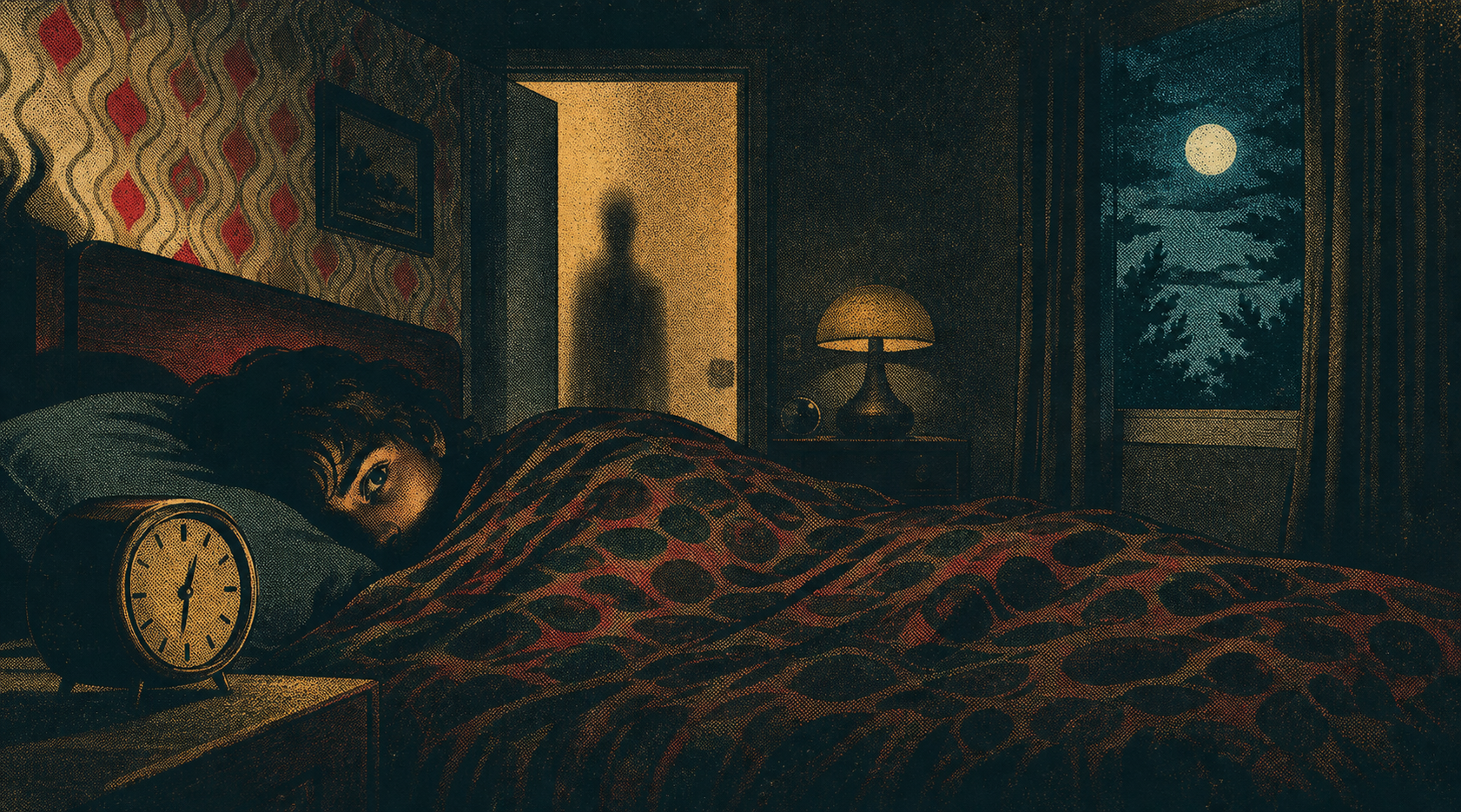
Sleep paralysis can feel like an intrusion from outside the self. A person wakes, cannot move, senses a presence and may see a figure, shadow or pressure at the edge of the bed.
Neurology explains much of the mechanism, but culture supplies the face. Different communities have described night visitors, crushing spirits, witches, demons, aliens or nameless watchers.
The experience deserves care because it is both explainable and genuinely frightening. Explaining it well should reduce fear without mocking the person who lived through it.
During ordinary sleep, the body uses muscle atonia to keep dream movement from becoming full physical action. Sleep paralysis can occur when waking awareness returns before that temporary immobility has lifted. The mind is awake enough to panic and dreamlike enough to keep generating presence, pressure and threat.
Bedroom conditions can sharpen the episode. A coat on a chair, a half-lit doorway, traffic moving across curtains or the weight of bedding can become part of the event. The witness is not inventing fear. They are trying to interpret a body that has briefly become unfamiliar.
Folklore matters because it gives the experience a script. If a culture speaks of night visitors, witches, alien abduction or shadow figures, those ideas can shape what people notice and remember. The same nervous system can produce different stories in different centuries.
A useful report records the sleep schedule, stress, medication, alcohol, room layout, light sources, repeated episodes and whether similar experiences happen when exhausted. That kind of detail can help someone find practical support while still respecting how powerful the event felt.
Sources and Further Reading
- Sleep medicine public resources
- Cross-cultural psychology papers
- Folklore studies
Sources and Further Reading
- Sleep medicine public resources
- Cross-cultural psychology papers
- Folklore studies