Occult & Esoteric Culture
Cursed Objects and the Stories We Attach to Things
Why ordinary objects can gather blame, awe and dread when misfortune needs a visible container.
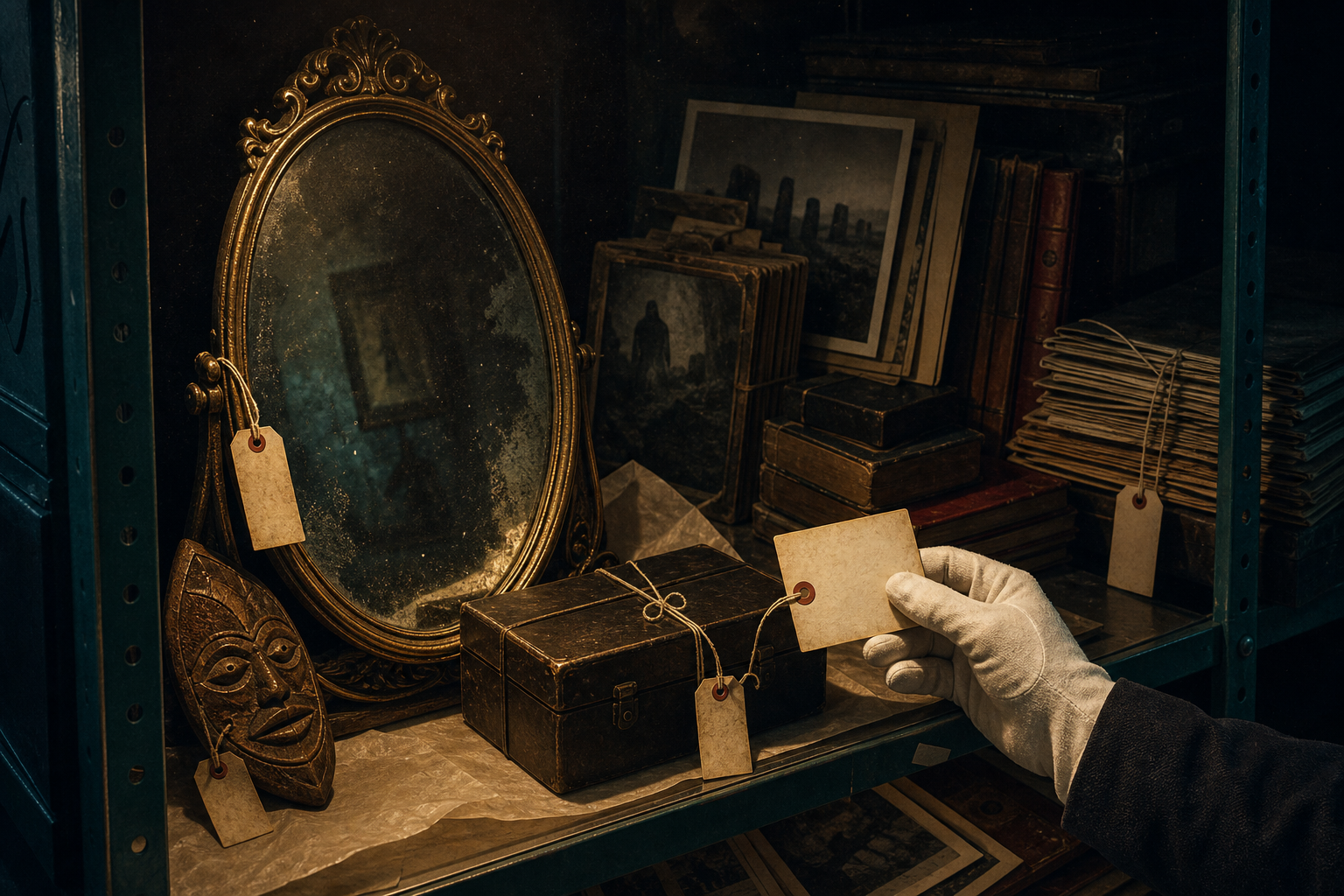
A cursed object is often less a thing than a story with handles. A ring, doll, mirror, book or portrait becomes easier to fear because it can be pointed at, locked away, sold, hidden or destroyed.
The pattern is old. People have long treated objects as carriers of luck, memory, status and pollution. When an unlucky sequence follows ownership, the object can become a tidy explanation for a messy life.
Responsible writing about cursed objects should separate provenance from rumour. Who owned it? When did the story begin? Are the alleged incidents documented, or do they grow more dramatic each time the object changes hands?
The strongest cursed-object stories usually have a social route. Someone inherits an item after a death, buys it from a stranger, removes it from a place where it was meant to remain, or displays it in a home where it feels out of place. The object becomes a visible point where discomfort can gather.
There is also an economics of dread. A supposedly cursed item can become more valuable, more clickable or more memorable because it has a story attached. Auction rooms, travelling exhibitions, online listings and local museums all know that a charged object draws attention. That does not make every claim cynical, but it means motive belongs in the file.
A careful archive asks whether the object was blamed before or after the misfortune. If three accidents are remembered only after a mirror breaks, the chronology matters. If the curse appears first in a sales description, that matters too. A curse that grows sharper each time the object changes hands may be a folklore process rather than a force.
The point is not to laugh at people for feeling uneasy around things. Objects can carry grief, violence, colonial history, family conflict and religious meaning. A sceptical reading can still admit that some possessions feel heavy because the human history around them is heavy.
Questions of Provenance
Document where the object came from, who owned it, when the unusual claims began and whether any named incidents can be checked independently.
The Story Around the Thing
Look for changes in the story across retellings. A curse that begins as bad luck may become a death omen, then a demon, then a marketable attraction.
Respect Without Panic
Some objects are culturally sensitive, sacred or tied to trauma. Treat them carefully, but do not let vague dread replace evidence, context and consent.
Sources and Further Reading
- Museum object interpretation guides
- Material culture scholarship
- Folklore and belief studies
Claim, Context and Cautions
- Questions of Provenance
- Document where the object came from, who owned it, when the unusual claims began and whether any named incidents can be checked independently.
- The Story Around the Thing
- Look for changes in the story across retellings. A curse that begins as bad luck may become a death omen, then a demon, then a marketable attraction.
- Respect Without Panic
- Some objects are culturally sensitive, sacred or tied to trauma. Treat them carefully, but do not let vague dread replace evidence, context and consent.
Sources and Further Reading
- Museum object interpretation guides
- Material culture scholarship
- Folklore and belief studies