Anomalous Science & Fringe Claims
Out-of-Place Artefacts and the Value of Caution
Why disputed objects need context, chain of custody and patient interpretation before becoming extraordinary evidence.
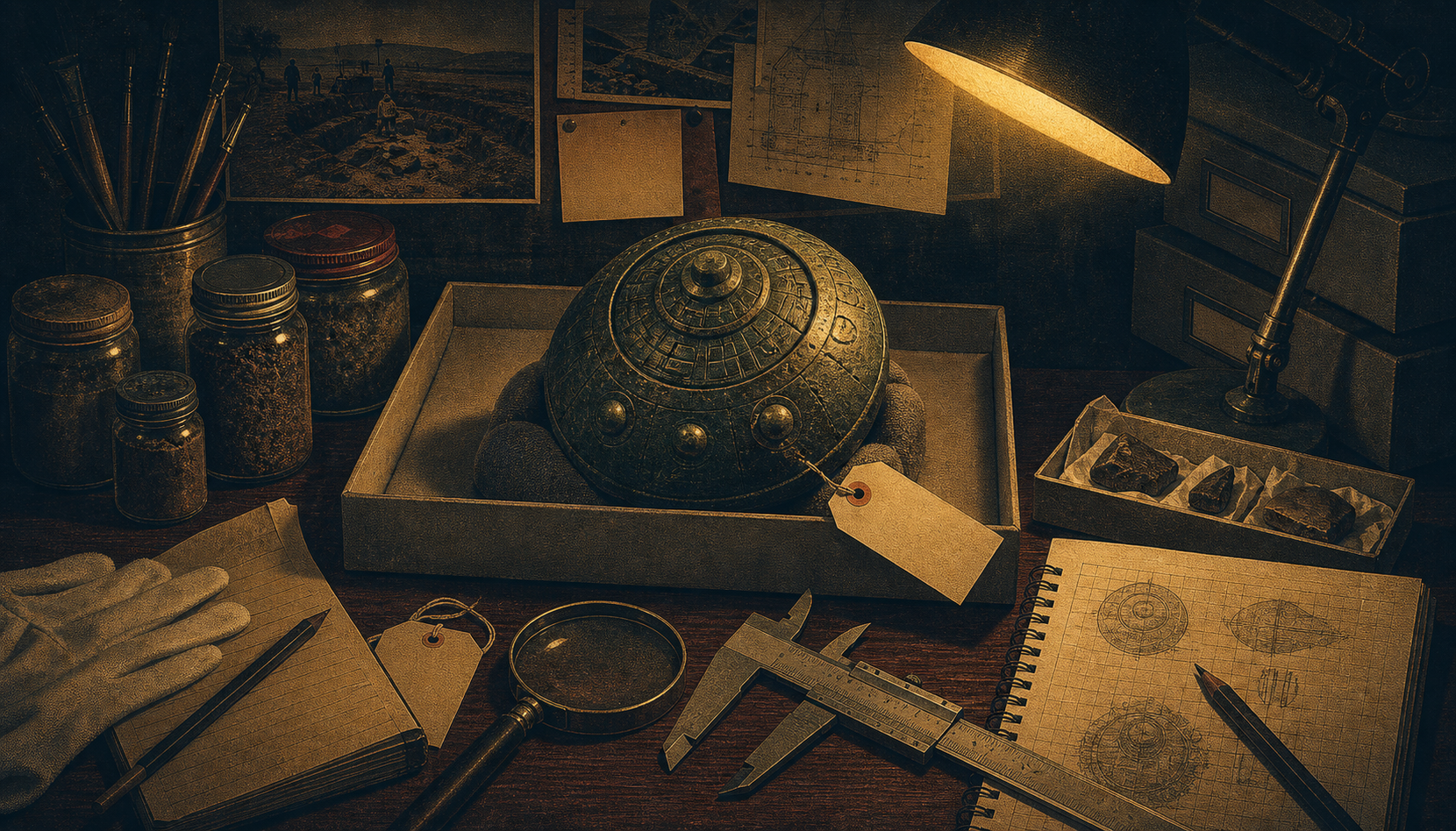
An object without context is a spark in dry grass. It can light up imagination quickly, but it can also burn away the careful questions that make archaeology useful.
Before treating an artefact as anomalous, ask where it was found, who documented it, what layer it came from, whether the record is contemporary and whether contamination or misidentification has been excluded.
The most interesting disputed objects are not the ones shouted about most loudly. They are the ones with enough documentation to make ordinary and extraordinary interpretations argue on the same page.
A disputed artefact needs a chain of custody as much as it needs an exciting shape. Who handled it first? Was the discovery photographed in place? Did it pass through a dealer, private collection or family story before anyone trained examined it? Each gap does not prove fraud, but each gap limits what can be claimed.
Material analysis can also be humbling. Corrosion, tool marks, casting methods, modern residues and repair work may tell a quieter story than the legend attached to the object. Sometimes the question is not whether the object is old, but whether it was found where the story says it was found.
There is a strong temptation to treat caution as hostility. It is not. Caution is what lets a genuinely interesting object survive contact with scrutiny. If a claim depends on avoiding provenance, excavation notes or comparison with ordinary artefacts, the mystery may be in the marketing rather than the ground.
Devil’s Hideout files disputed objects in a way that keeps claim, context and interpretation separate. A bronze disc, carved stone or strange tool can be visually compelling while still failing as extraordinary evidence. That distinction is where useful research begins.
Sources and Further Reading
- Archaeological method introductions
- Museum acquisition ethics
- Conservation documentation standards
Sources and Further Reading
- Archaeological method introductions
- Museum acquisition ethics
- Conservation documentation standards