Folklore & Legends
Urban Legends Before the Internet
Chain letters, photocopies, local radio and schoolyard retellings show that viral folklore did not need a screen.
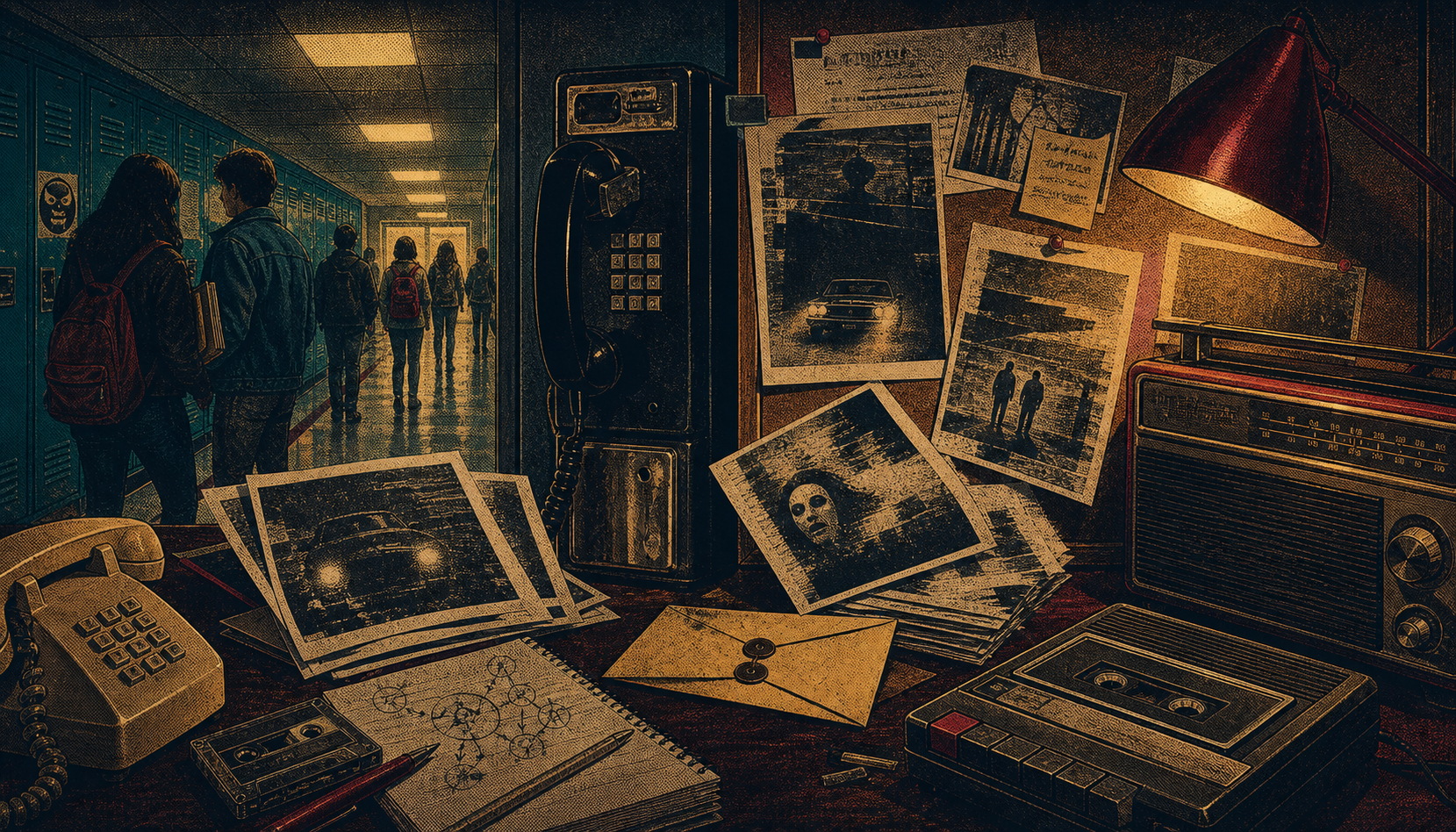
The internet did not invent the viral strange tale. It accelerated a habit people already had: passing on warnings, shocks and almost-believable stories with just enough local detail to feel urgent.
Before social feeds, legends moved by photocopied warnings, tabloid columns, call-in radio, school corridors and workplace talk. Each telling could swap in a nearby road, a local hospital or a friend of a friend.
Studying pre-internet legends helps us see the machinery more clearly. A platform changes the speed, but the appetite for useful fear remains very old.
The classic marker is the borrowed witness: a cousin, neighbour, nurse, police officer, taxi driver or friend of a friend. That distance gives the story authority while keeping it hard to check. It feels close enough to trust and far enough to avoid direct verification.
Many urban legends behave like warnings. They tell people which roads, strangers, foods, technologies, games or social habits to fear. The details change with the decade. A telephone becomes a payphone, then a mobile, then a social account. The underlying anxiety keeps finding new props.
Pre-internet circulation also left physical traces. Photocopied sheets, local newspaper fillers, letters to advice columns, radio call-ins and school rumours can be compared like layers in a dig. The point is not to find one original version, but to watch how a story adapts to each community.
That older machinery matters now because online folklore still uses it. Screens make rumours faster, but not necessarily stranger. The oldest engine remains the same: a story that sounds useful, frightening, funny or morally satisfying enough to repeat.
Sources and Further Reading
- Modern folklore scholarship
- Media history archives
- Urban legend research collections
Sources and Further Reading
- Modern folklore scholarship
- Media history archives
- Urban legend research collections