Unexplained Phenomena
The Anatomy of a Haunting Report
A practical guide to separating atmosphere, testimony, memory, environment and possible causes in a reported haunting.
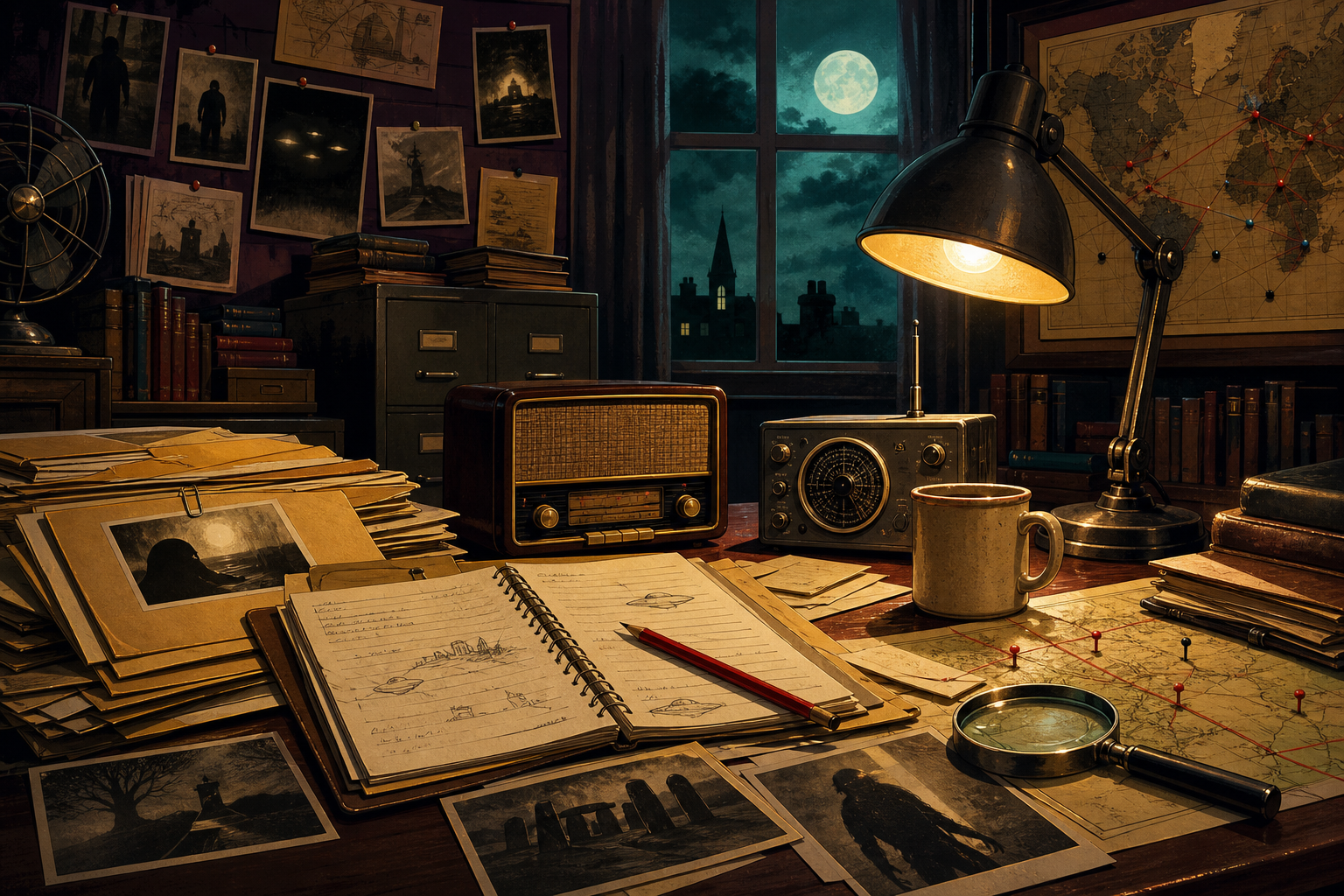
A haunting report is rarely one thing. It is usually a stack of impressions: a place with a reputation, a witness under particular conditions, a remembered sequence of events and a later attempt to make meaning from it.
The strongest reports preserve ordinary details as carefully as extraordinary ones. Time, temperature, lighting, building layout, recent stress, prior expectations and possible natural sources all matter. A responsible case file does not flatten a witness into either a believer or a fool.
Good investigation begins by writing down the claim in plain language. What exactly was seen, heard or felt? Who was present? What changed in the environment? What would count as a normal explanation? Only then can folklore, psychology, building conditions and genuine uncertainty be held in view together.
The atmosphere of a place can be real without the haunting being literal. Old houses creak, heating systems tick, damp changes sound, and light behaves strangely around stairwells, mirrors and windows. A witness may still have had a frightening experience even when part of the cause turns out to be architectural.
A useful haunting file begins with a timeline. Do not start with the most dramatic moment; start with the day, the state of the building, who was present, what each person knew beforehand, and whether anything similar had happened before. Reports gathered after a reputation has formed are not worthless, but they carry a different kind of weight.
Witnesses should be interviewed gently and separately where possible. Ask for sensory details before interpretations. ‘I saw a woman in grey’ is different from ‘I saw a vertical pale shape near the landing for three seconds.’ The first may be the honest memory; the second may be the observation underneath it.
Environmental checks are not a sceptical insult. Carbon monoxide, infrasound, sleep disruption, grief, electrical faults, animal movement, plumbing, traffic vibration and neighbour noise all belong in the file. Excluding them is how an unexplained case becomes stronger; ignoring them is how a weak case becomes theatrical.
The best haunting reports preserve uncertainty without decorating it. A responsible archive can say: this was reported, these details are stable, these explanations remain plausible, this part is folklore, and this part still resists easy sorting.
What to Record First
Write down the first report as close to the event as possible: exact time, lighting, room layout, witness position, weather, sound sources, sleep state and emotional context. Ask witnesses not to compare accounts until each has written a private version.
Evidence That Helps
Original audio, photographs, building plans, repair records, weather data and independent witness notes are more useful than dramatic retellings. A poor photograph can still matter if its time, direction and original file are preserved.
Why Cases Stay Interesting
Haunting reports sit where private experience meets place-memory. Even explained cases can reveal how buildings, grief, rumour and local identity shape what people notice in the dark.
Sources and Further Reading
- Historic England building research guidance
- Society for Psychical Research public history pages
- British Newspaper Archive topic research
Claim, Context and Cautions
- What to Record First
- Write down the first report as close to the event as possible: exact time, lighting, room layout, witness position, weather, sound sources, sleep state and emotional context. Ask witnesses not to compare accounts until each has written a private version.
- Evidence That Helps
- Original audio, photographs, building plans, repair records, weather data and independent witness notes are more useful than dramatic retellings. A poor photograph can still matter if its time, direction and original file are preserved.
- Why Cases Stay Interesting
- Haunting reports sit where private experience meets place-memory. Even explained cases can reveal how buildings, grief, rumour and local identity shape what people notice in the dark.
Sources and Further Reading
- Historic England building research guidance
- Society for Psychical Research public history pages
- British Newspaper Archive topic research