Folklore & Legends
Fairy Lore as Local Geography
Hills, rings, paths and boundaries often matter more than wings or glitter in older fairy traditions.
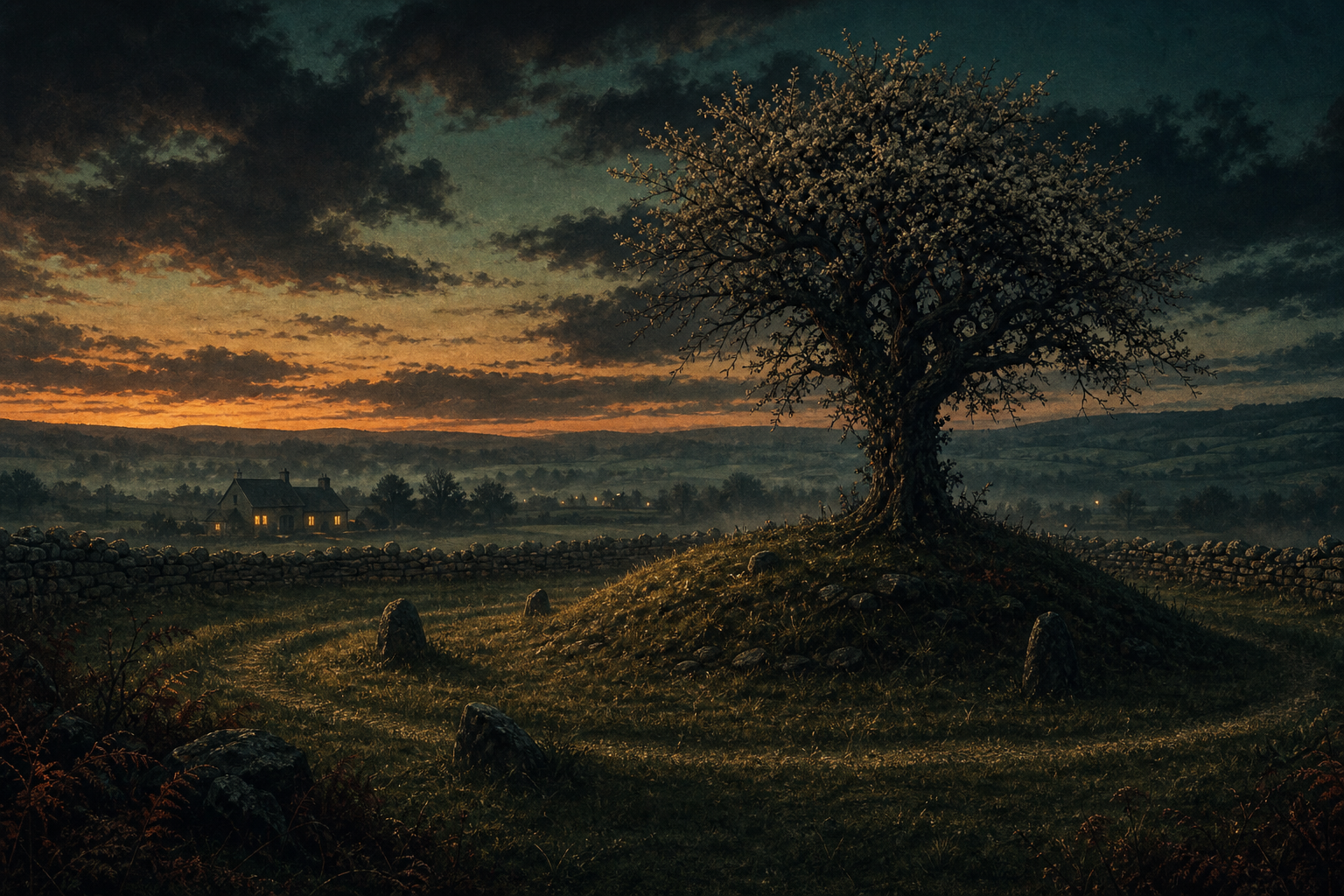
Older fairy lore is often a map before it is a cast list. A mound, thorn tree, ring, path or crossing can tell people where not to build, when not to travel and how to behave near places treated as charged.
These stories do social work. They preserve caution around dangerous ground, mark community memory and give landscape a moral texture. The supernatural element is inseparable from the place.
Modern versions often turn fairy belief into decoration. The archive is more interesting when it keeps the geography intact: the field, the road, the neighbour, the seasonal rule and the cost of ignoring it.
A fairy place is often a place of negotiation. People may avoid cutting a tree, leave a path undisturbed, speak carefully near a mound or explain a run of bad luck through a broken rule. The story tells people how to move through a landscape without acting as if it is empty.
This does not mean every fairy tradition is secretly practical advice in costume. Some stories are religious, some playful, some frightening, some political, some rooted in older land use and some shaped by later tourism. But the repeated link between story and place is too strong to treat as mere decoration.
The details matter. A ring in a field is not the same as a bridge, a fort, a lone tree or a household threshold. Each location gathers different behaviours and warnings. The same word can cover many local beings, powers and rules.
When folklore moves online, the landscape often gets flattened. A story that once belonged to a named bend in a road becomes a generic spooky anecdote. Devil’s Hideout keeps the place in the file because the place is part of the evidence.
Landscape Features
Look for mounds, rings, lone trees, paths, wells, bridges, forts and thresholds. The physical setting usually explains the rule better than a detached summary can.
Rules and Consequences
Fairy traditions often include behaviour: do not cut, do not build, do not boast, do not follow, do not speak carelessly. Record the rule as carefully as the apparition.
Modern Retellings
Online versions can preserve old material, but they also detach stories from local voices. Compare viral retellings with regional collections when possible.
Sources and Further Reading
- National folklore collections
- Landscape archaeology introductions
- Regional oral tradition studies
Claim, Context and Cautions
- Landscape Features
- Look for mounds, rings, lone trees, paths, wells, bridges, forts and thresholds. The physical setting usually explains the rule better than a detached summary can.
- Rules and Consequences
- Fairy traditions often include behaviour: do not cut, do not build, do not boast, do not follow, do not speak carelessly. Record the rule as carefully as the apparition.
- Modern Retellings
- Online versions can preserve old material, but they also detach stories from local voices. Compare viral retellings with regional collections when possible.
Sources and Further Reading
- National folklore collections
- Landscape archaeology introductions
- Regional oral tradition studies