Hoaxes & Debunks
A Field Guide for Recording Strange Experiences Responsibly
A calm checklist for writing down unusual events before memory, excitement and online feedback reshape them.
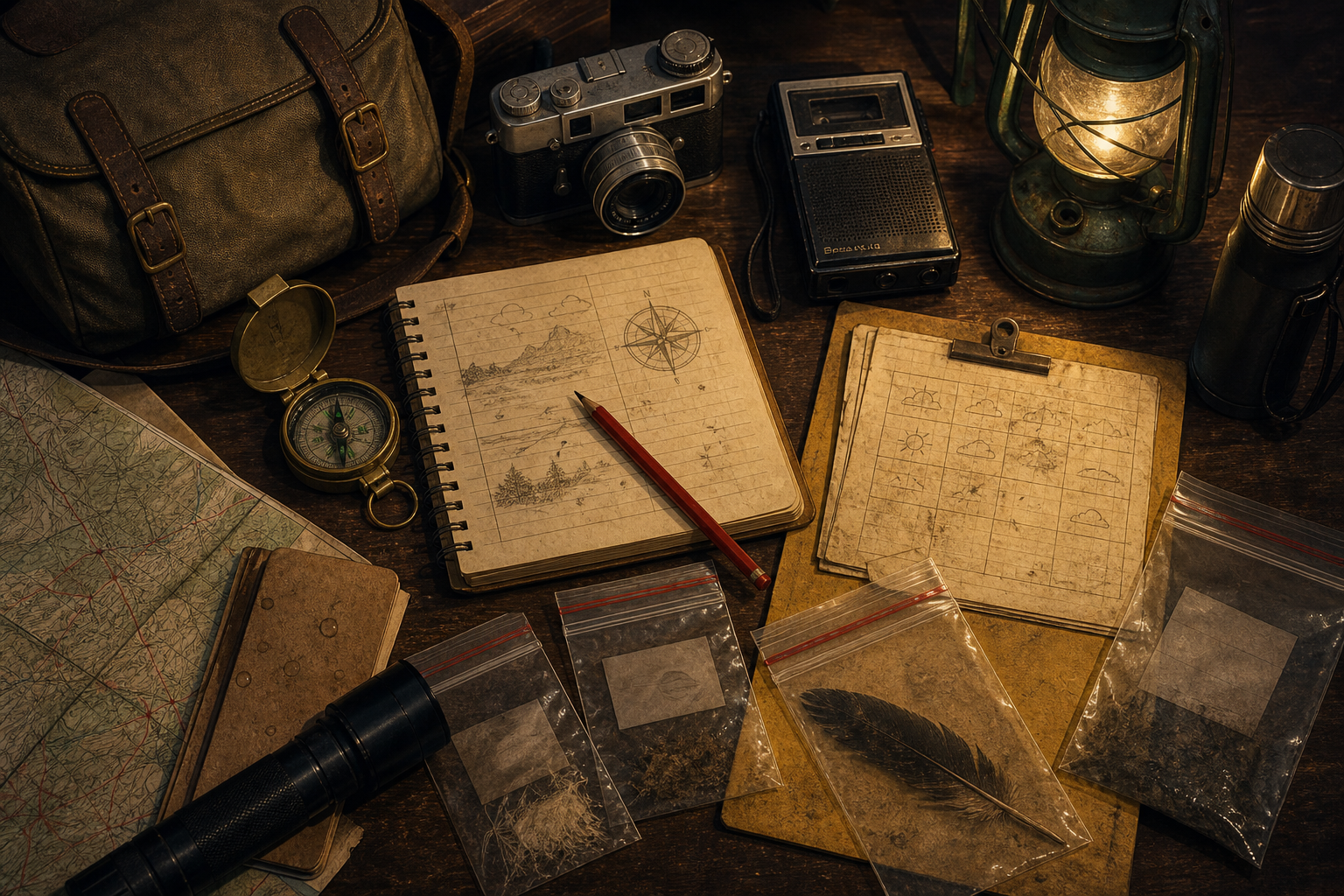
The first version of a report is precious because it has not yet been polished into a story. Write it down before searching online, telling a crowd or deciding what it must have been.
Record the dull facts: time, direction, duration, weather, sleep, stress, lighting, witnesses, photographs, sounds and possible ordinary causes. Those details are not there to spoil the mystery. They are what give the mystery shape.
If other witnesses were present, ask them to write separately. Agreement after discussion is less useful than independent accounts that can later be compared.
A good field note should preserve uncertainty. Write what happened, then write what you think it might mean in a separate section. This distinction is small but powerful. It stops interpretation from creeping into the observation and disguising itself as memory.
Photographs and audio need context. A blurry image may be useless alone but useful when paired with direction, distance, camera settings and the original unedited file. A sound recording may matter only if the location, wind, nearby roads and animals are also noted.
Do not tidy a strange experience too quickly. Real reports are often awkward: the witness looked away, the object vanished behind a tree, the phone failed to focus, someone laughed, someone panicked, the clock time is approximate. Those imperfections can make a report more trustworthy than a theatrical account with every beat in perfect order.
Finally, record possible normal explanations while they are still fresh. Aircraft, satellites, wildlife, reflections, sleep states, stress, local rumours and faulty equipment should be treated as part of the investigation, not as hostile interruptions.
The First Five Minutes
Write down the time, place, direction and duration before doing anything else. If there are other witnesses, ask them to record private notes before discussing details.
Keep Originals
Do not crop, filter or compress the only copy of a photo or recording. Save the original file, then make duplicates for sharing or analysis.
Separate Observation From Meaning
Use two headings: ‘What I noticed’ and ‘What I think it could be.’ This keeps the report useful even if your interpretation changes later.
Sources and Further Reading
- Oral history interview methods
- Citizen science observation guidance
- Emergency incident note-taking practice
Claim, Context and Cautions
- The First Five Minutes
- Write down the time, place, direction and duration before doing anything else. If there are other witnesses, ask them to record private notes before discussing details.
- Keep Originals
- Do not crop, filter or compress the only copy of a photo or recording. Save the original file, then make duplicates for sharing or analysis.
- Separate Observation From Meaning
- Use two headings: 'What I noticed' and 'What I think it could be.' This keeps the report useful even if your interpretation changes later.
Sources and Further Reading
- Oral history interview methods
- Citizen science observation guidance
- Emergency incident note-taking practice