Hoaxes & Debunks
The Window Face Photograph: Why the Brain Keeps Finding a Person in the Glass
A face in a window is a useful archive case because it lets us talk about pareidolia, photography and the way expectation edits what we think we saw.
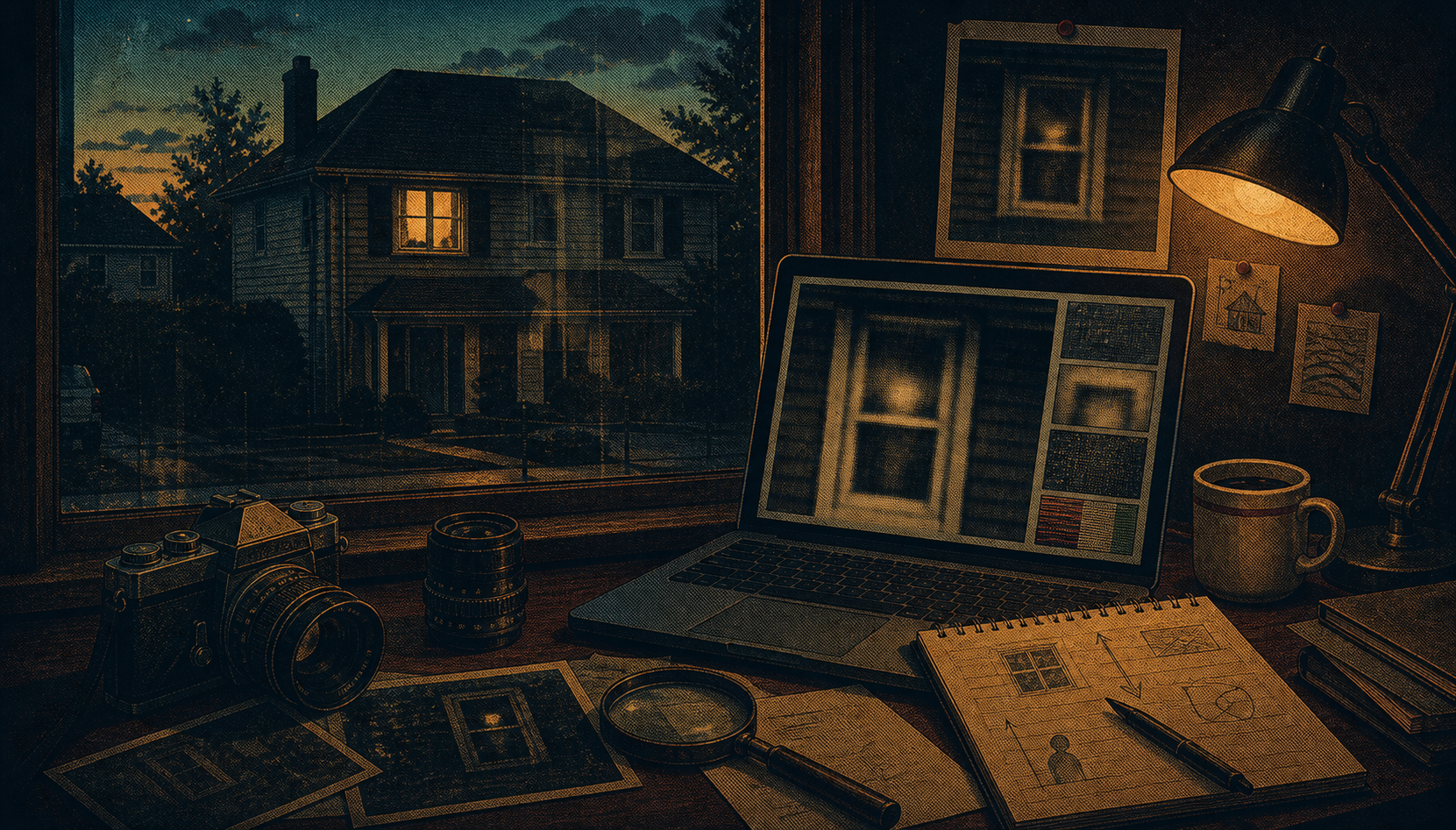
The window-face photograph is a quiet case, but it is one of the best possible training examples for strange-archive reading. A viewer sees a face in the glass and immediately wants the story to be either ghostly or deliberate. In reality, the image is doing something much more ordinary and much more interesting.
Britannica’s discussion of pareidolia is the key here: humans are built to read faces in ambiguous patterns. A bit of reflection, a patch of shadow and the right angle can produce a remarkably persuasive person-shaped image. The photograph becomes a mirror for expectation.
The archive lesson is not that viewers are foolish. It is that the brain is hungry for faces, and photographs are excellent at turning that hunger into certainty. That is why haunted pictures, sky anomalies and accidental portraits can all feel equally undeniable in the moment.
For Devil’s Hideout, this case is important because it explains why image-led mysteries spread so efficiently. A face in a window is not just a clue; it is a cognitive trap with a pretty frame.
Why Faces Win
Human perception prioritises faces, which makes reflections and partial shapes feel immediately intentional.
How to Read the Photo
Treat the image as a study in perception first and an extraordinary claim second.
Case Notes
- Claim
- A window photograph appears to contain a human face, prompting the familiar question of whether the image captured something unseen.
- Background
- Faces are especially sticky to the brain, and reflections, contrast and partial occlusion can make ordinary domestic scenes feel haunted or meaningful.
- Reported events
- Once the image is circulated, viewers start to disagree about whether it shows a face, a reflection, a pattern or a story generated by suggestion.
- Possible explanations
- The best explanation is pareidolia sharpened by framing, lighting and the human tendency to treat faces as urgent information.
- Sceptical view
- The photo is a strong reminder that visual confidence is not the same as visual evidence. What feels immediate is often a collaboration between eyes and expectation.
- Why it still interests people
- It remains useful because many of the weirdest archive stories begin this way: one image, one face, and a whole argument about what counts as seeing.
- People or entities
- photographer, viewers, image analysts, pareidolia researchers
Sources and Further Reading
- Britannica: PareidoliaOverview of face-finding in ambiguous visual stimuli.
- Britannica: Optical illusionContext for visual misreadings and image-based misperception.
- PMC: Face pareidolia in the brainResearch article on face pareidolia and perceptual mechanisms.
Claim, Context and Cautions
- Why Faces Win
- Human perception prioritises faces, which makes reflections and partial shapes feel immediately intentional.
- How to Read the Photo
- Treat the image as a study in perception first and an extraordinary claim second.
Sources and Further Reading
- Britannica: PareidoliaOverview of face-finding in ambiguous visual stimuli.
- Britannica: Optical illusionContext for visual misreadings and image-based misperception.
- PMC: Face pareidolia in the brainResearch article on face pareidolia and perceptual mechanisms.