Strange History
The Dancing Plague of 1518
In Strasbourg, reports of compulsive dancing became one of history's strangest examples of body, belief, stress and record colliding.
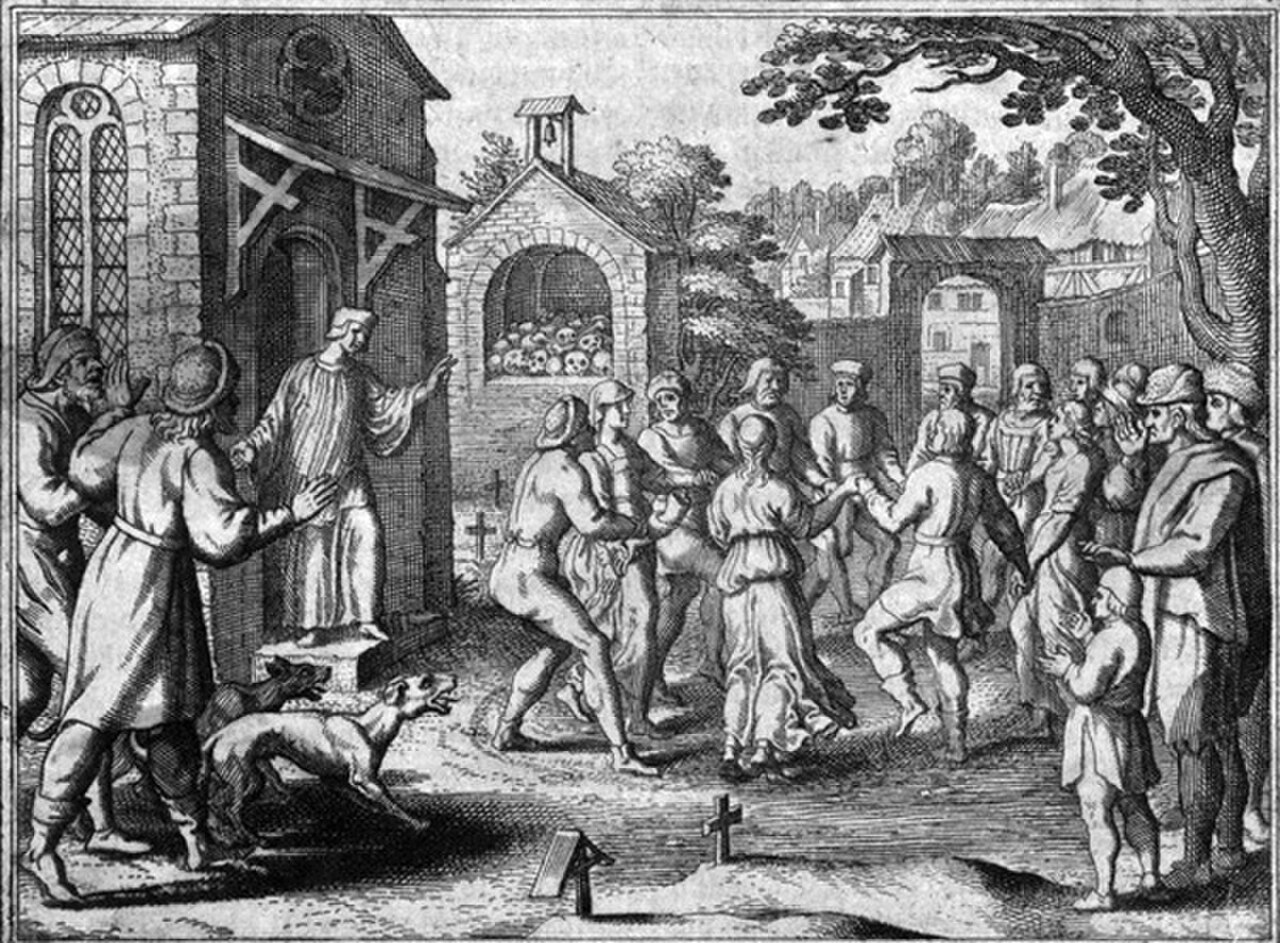
The Dancing Plague of 1518 sounds like a metaphor until the sources make it uncomfortably physical. In Strasbourg, a city under social, religious and medical pressures, reports emerged of people dancing compulsively in public. The story has been simplified often: a woman begins to dance, others join, the city tries to manage the outbreak and the dancers continue until exhaustion.
What makes the case difficult is not the absence of history, but the texture of it. The event belongs to a world where illness, divine punishment, saints, social stress and civic authority could occupy the same explanatory space. A modern label can clarify some things and flatten others.
Mass psychogenic illness is a serious possibility because it allows distress to become bodily and contagious without requiring deliberate performance. Strasbourg had reasons for distress: hardship, disease fears, religious pressure and communal anxiety. A behaviour can spread socially without being fake. That distinction matters.
Other explanations have been proposed, including poisoning by ergot or other physiological causes. Those theories are attractive because they make the event chemical and tidy, but they do not account equally well for the cultural shape of the outbreak. The dancers were not just bodies in motion; they were people inside a belief system that already had room for cursed, compelled or saint-linked movement.
The authorities’ reported responses are part of the fascination. If officials believed dancing might purge the condition, then encouraging movement was not absurd within their framework. Later restrictions show a change in interpretation, or at least a change in tolerance. The case becomes a study in how institutions react when explanation is uncertain.
Numbers should be handled carefully. Popular accounts can inflate crowds and deaths because the image is so powerful. A responsible case file should say that reports describe a serious outbreak while admitting that the precise scale is contested. The archive should preserve the strangeness without turning uncertainty into decoration.
The Dancing Plague remains valuable because it resists a single clean shelf. It is medical history, religious history, folklore, civic history and psychology at once. Its lesson is not that people in the past were irrational. It is that bodies, beliefs and communities can make each other visible in ways that later centuries struggle to classify.
Evidence Caution
The event is widely discussed in historical writing, but exact numbers and deaths are difficult to establish. Treat dramatic figures as claims to be checked, not settled facts.
Why It Belongs Here
The case sits at the meeting point of strange history, anomalous behaviour, folklore, medicine and sceptical interpretation.
Case Notes
- Claim
- Hundreds of people in Strasbourg were said to dance uncontrollably for weeks in 1518, with exhaustion, injury and possible deaths reported in later accounts.
- Background
- The event belongs to a wider European history of dancing mania, religious anxiety, illness, hardship and communal behaviour.
- Reported events
- Accounts describe a woman beginning to dance in public, followed by others. Authorities reportedly tried responses that included encouraging dancing before later restricting it.
- Possible explanations
- Suggested explanations include mass psychogenic illness under severe stress, religious expectation, social contagion, illness, exaggeration and later narrative shaping.
- Sceptical view
- The event is historically grounded but difficult to quantify; numbers, deaths and details vary across retellings and should be treated cautiously.
- Why it still interests people
- The case endures because it makes the boundary between body, belief and community pressure feel unstable.
- People or entities
- Strasbourg residents, City authorities, Physicians and chroniclers
Sources and Further Reading
- Britannica: Dancing plague of 1518Reference overview and explanation theories.
- HISTORY: What Was the Dancing Plague of 1518?Accessible secondary overview.
- Wikimedia Commons: Dancing plague illustrationPublic-domain image used for this entry.
Claim, Context and Cautions
- Evidence Caution
- The event is widely discussed in historical writing, but exact numbers and deaths are difficult to establish. Treat dramatic figures as claims to be checked, not settled facts.
- Why It Belongs Here
- The case sits at the meeting point of strange history, anomalous behaviour, folklore, medicine and sceptical interpretation.
Sources and Further Reading
- Britannica: Dancing plague of 1518Reference overview and explanation theories.
- HISTORY: What Was the Dancing Plague of 1518?Accessible secondary overview.
- Wikimedia Commons: Dancing plague illustrationPublic-domain image used for this entry.