Unexplained Phenomena
Borley Rectory: The Making of a Haunted House
Borley Rectory became a benchmark haunted-house case because witness claims, press attention, Harry Price's investigations and later criticism all gathered around one vanished building.
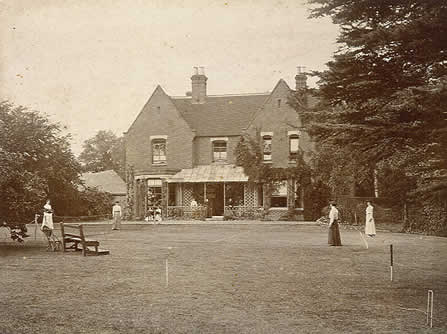
Borley Rectory is less a single ghost story than a machine for producing ghost stories. Built in the nineteenth century in Essex, the rectory became famous as one of Britain’s most discussed haunted houses. By the time it burned in 1939 and was demolished in 1944, the building had already become larger than itself.
The claims included footsteps, apparitions, bells, object movements, writing on walls and the repeated image of a spectral nun. Some reports predated Harry Price, the psychical researcher who would later make Borley internationally famous, but Price’s involvement transformed the case from local reputation into public spectacle.
That spectacle is the difficulty. Price was energetic, media-aware and capable of exposing fraudulent mediums elsewhere, but Borley also drew criticism over method, control and possible exaggeration. Later investigators and writers argued over whether some phenomena were misreported, staged, misunderstood or produced by people inside the case.
The household setting matters. Haunted-house cases often mix architecture, family stress, servants, visitors, gossip and expectation. A creak or bell can become meaningful once everyone knows the house is supposed to be haunted. Once reporters arrive, a quiet night is disappointing and a noisy one becomes evidence.
Borley also shows why destruction can strengthen a mystery. The building is gone, so later readers encounter photographs, plans, witness statements, books and arguments rather than a site that can be tested in the same way. Absence turns the rectory into an archive problem.
A sceptically open reading does not need to mock every witness or accept every claim. It asks how each report was recorded, who was present, whether independent checks were possible, what motives existed, and whether later retellings made the case tidier than the evidence.
For Devil’s Hideout, Borley belongs as a haunted-place case file precisely because it is messy. It teaches that famous cases are often not the strongest cases. They are the ones where story, media and personality made the haunting unusually durable.
Why Borley Became Famous
The case combined a dramatic house, long-running reports, press attention and an investigator skilled at making a mystery public.
The Investigation Problem
Observers, residents, journalists and investigators were not separate from the case; their presence helped shape what later counted as evidence.
Status
The case is best treated as disputed: culturally important, historically documented and heavily contested as paranormal evidence.
Case Notes
- Claim
- Borley Rectory was said to be the site of apparitions, footsteps, object movements, messages, bells and other haunting phenomena.
- Background
- The rectory’s reputation grew from local stories, family testimony, newspaper attention and Harry Price’s theatrical but influential investigations.
- Reported events
- Reports accumulated over decades, Price publicised the case, observers visited, the building burned in 1939 and was later demolished, while arguments over witness reliability and possible fraud continued.
- Possible explanations
- Possible explanations include local legend, misperception, household conflict, unreliable testimony, deliberate fakery, investigator influence and selective publicity.
- Sceptical view
- Borley is not a clean proof case. It is a case about how a location becomes famous when testimony, publicity and investigation shape each other.
- Why it still interests people
- It remains valuable because it contains almost every haunted-house problem at once: atmosphere, witnesses, researchers, press, motive, memory, fraud claims and folklore afterlife.
- People or entities
- Harry Price, The Bull family, Lionel and Marianne Foyster, Society for Psychical Research critics
Sources and Further Reading
- Wikimedia Commons: BorleyRectory1892.jpgPublic-domain image used for this entry.
- Psi Encyclopedia: Borley RectoryDetailed overview of claims, Price’s role and later controversy.
- UMBC Special Collections: The Haunting of Borley RectoryCollection context for Borley material and haunted-house publishing.
Claim, Context and Cautions
- Why Borley Became Famous
- The case combined a dramatic house, long-running reports, press attention and an investigator skilled at making a mystery public.
- The Investigation Problem
- Observers, residents, journalists and investigators were not separate from the case; their presence helped shape what later counted as evidence.
- Status
- The case is best treated as disputed: culturally important, historically documented and heavily contested as paranormal evidence.
Sources and Further Reading
- Wikimedia Commons: BorleyRectory1892.jpgPublic-domain image used for this entry.
- Psi Encyclopedia: Borley RectoryDetailed overview of claims, Price's role and later controversy.
- UMBC Special Collections: The Haunting of Borley RectoryCollection context for Borley material and haunted-house publishing.