Anomalous Science & Fringe Claims
The Antikythera Mechanism: Ancient Gears Without Ancient Aliens
The Antikythera Mechanism is genuinely astonishing, but its lesson is ancient technical skill, not a shortcut to fringe claims.
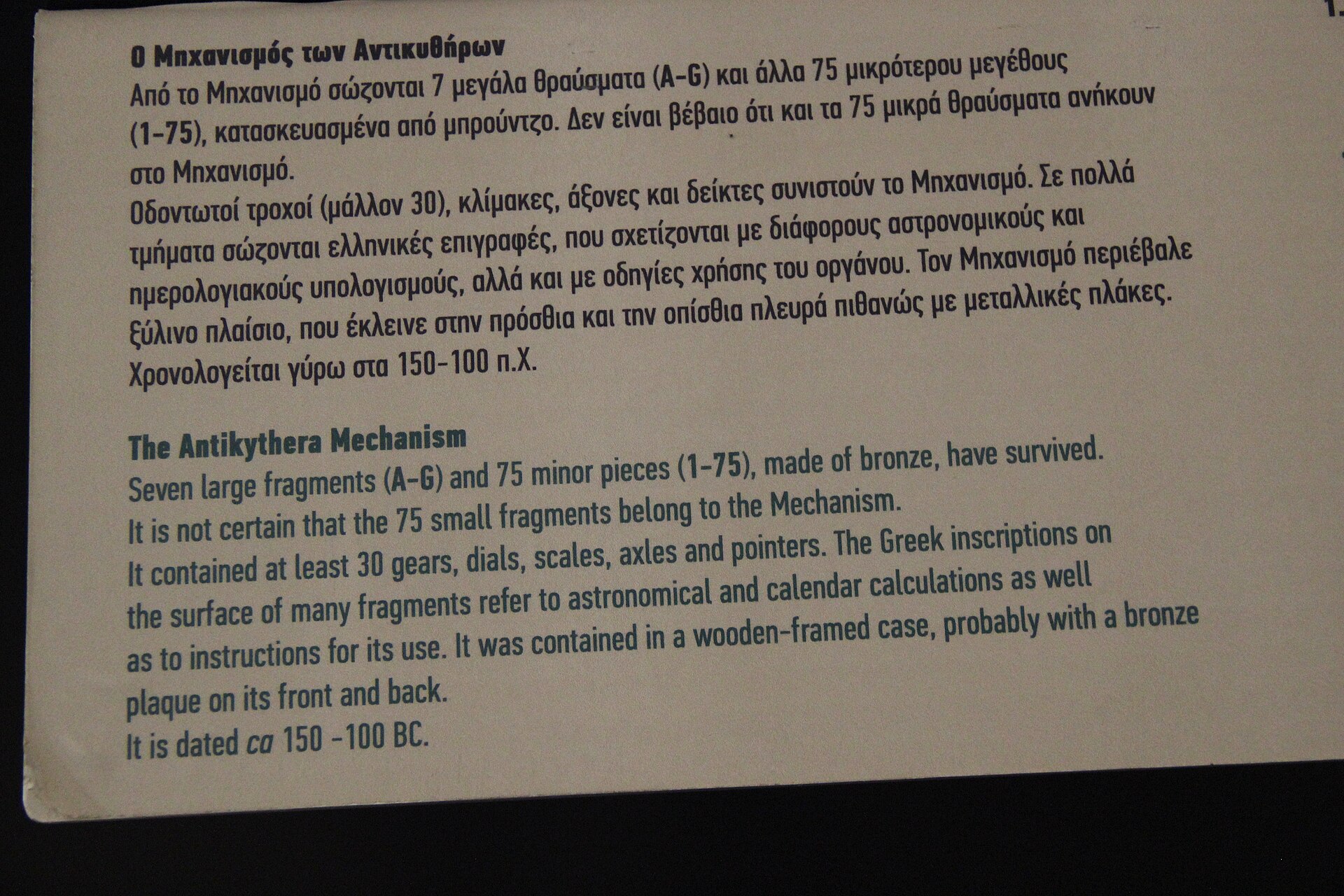
The Antikythera Mechanism is the rare object that deserves its astonishment. Recovered from a shipwreck near the Greek island of Antikythera in 1901, it first appeared as corroded fragments. Closer study revealed gear teeth, inscriptions and a level of mechanical design that forced historians to widen their expectations of ancient technology.
That surprise has made the mechanism a favourite of fringe storytelling. It is easy to frame it as an object out of time, as if complexity itself were evidence that the ancient world could not have made it. But the better story is stranger and more respectful: ancient Greek mathematics, astronomy, metalwork and instrument-making were capable of more than later centuries remembered.
The device appears to have modelled astronomical cycles, including calendrical relationships and eclipse prediction. Modern imaging made the fragments newly legible, allowing researchers to reconstruct parts of the machine’s internal logic without pretending that every question is settled.
The Antikythera case is useful because it is both anomalous and explainable. It was anomalous in the sense that few comparable devices survive from the period. It is not anomalous in the sense of requiring an impossible origin. Absence of many surviving examples is not proof that no human workshop could make one.
Shipwreck context matters. Objects from antiquity survive unevenly, and metal devices were often recycled, corroded or lost. A sophisticated bronze mechanism is exactly the sort of thing that might vanish from the record unless a wreck sealed it away.
The sceptical view therefore does not drain the mystery. It redirects it. The question becomes: what networks of craft, astronomy, education and patronage allowed such a machine to exist, and why did that tradition leave so few surviving traces?
For Devil’s Hideout, Antikythera belongs on the strange-archaeology shelf as a corrective to lazy impossibility. The object is marvellous enough without importing aliens, giants or vanished super-civilisations.
What Makes It Extraordinary
The mechanism combined gearing, inscriptions and astronomical modelling in a compact ancient device.
What It Does Not Prove
It does not require a lost modern civilisation. It points to advanced Hellenistic craft and mathematical astronomy.
Archive Lesson
An object can be exceptional without being impossible. Rarity is a research problem, not a licence to ignore context.
Case Notes
- Claim
- A corroded ancient object from a shipwreck proved to contain complex gearing capable of modelling astronomical cycles.
- Background
- The mechanism was recovered from a Roman-era shipwreck near Antikythera and gradually recognised as a sophisticated Greek geared device.
- Reported events
- Early inspection revealed gearwork; later radiography and high-resolution imaging showed inscriptions, dials and mechanical relationships tied to calendars, eclipses and celestial cycles.
- Possible explanations
- The mechanism is best understood as an advanced product of Hellenistic mathematical astronomy and craftsmanship rather than evidence of lost modern technology or non-human assistance.
- Sceptical view
- Calling it impossible for ancient people says more about modern underestimation than about the object. The evidence points to skilled human design.
- Why it still interests people
- It remains thrilling because it raises the standard for what ancient engineering could do while keeping the explanation firmly historical.
- People or entities
- Antikythera shipwreck divers, Derek de Solla Price, Antikythera Mechanism Research Project
Sources and Further Reading
- Wikimedia Commons: Ancient Greece The Antikythera MechanismCC0 image used for this entry.
- Britannica: Antikythera mechanismReference overview of discovery, description and research.
- Nature: Decoding the ancient Greek astronomical calculatorResearch article on imaging and interpretation.
- ASME Landmark: The Antikythera MechanismEngineering-history context.
Claim, Context and Cautions
- What Makes It Extraordinary
- The mechanism combined gearing, inscriptions and astronomical modelling in a compact ancient device.
- What It Does Not Prove
- It does not require a lost modern civilisation. It points to advanced Hellenistic craft and mathematical astronomy.
- Archive Lesson
- An object can be exceptional without being impossible. Rarity is a research problem, not a licence to ignore context.
Sources and Further Reading
- Wikimedia Commons: Ancient Greece The Antikythera MechanismCC0 image used for this entry.
- Britannica: Antikythera mechanismReference overview of discovery, description and research.
- Nature: Decoding the ancient Greek astronomical calculatorResearch article on imaging and interpretation.
- ASME Landmark: The Antikythera MechanismEngineering-history context.