Anomalous Science & Fringe Claims
The Nazca Lines: Huge Drawings Without Impossible Builders
The Nazca Lines are extraordinary landscape works, but careful archaeology explains them through human labour, ritual geography and desert preservation.
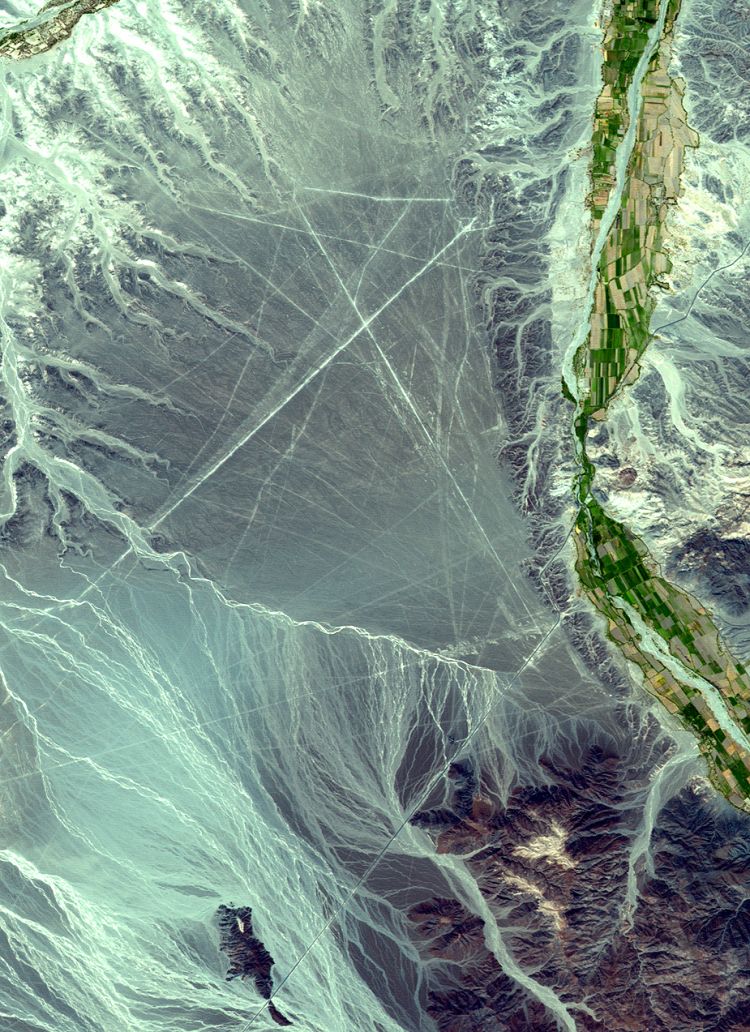
The Nazca Lines are among the world’s great landscape mysteries, but not because no human could have made them. Their power lies in scale, setting and survival. Across the dry Peruvian desert, long straight lines, geometric forms and animal figures mark the ground with a confidence that still feels startling from above.
The basic technique is practical. Darker stones on the desert surface were moved aside, revealing lighter material beneath. In the Nazca environment, with little rain and limited disturbance, those marks could survive for centuries. The result is visually dramatic without requiring impossible technology.
Fringe versions often begin from aerial photographs and then assume the makers must also have needed aircraft. That is a modern viewing bias. Large designs can be planned from the ground using stakes, cords, sightlines, grids, slopes and social coordination. Scale is not the same as impossibility.
The harder question is purpose. Scholars have connected the lines to ritual movement, water, cosmology, social gathering and sacred landscape. There may not be one explanation for every mark. A landscape used for generations can hold multiple meanings.
Maria Reiche’s long work helped bring the lines global attention and preservation concern, even though later scholarship has revised and complicated earlier astronomical interpretations. That is a useful archive lesson: protecting a mystery and fully explaining it are not the same task.
The Nazca Lines also show how aerial media changes interpretation. Once people see the figures from above, they can forget that ancient landscapes were walked, climbed, crossed and viewed from many positions. The desert was not a blank page waiting for aircraft; it was a lived ritual environment.
For Devil’s Hideout, Nazca belongs in strange archaeology because it is genuinely wonderful and frequently misused. The responsible answer does not shrink the lines. It gives the builders back their skill.
How They Were Made
Many lines were produced by clearing dark surface stones to expose lighter desert ground, a simple method made durable by arid conditions.
Why Alien Claims Fail
Large-scale planning does not require flight. Ground methods, sightlines and collective labour are enough to explain construction.
Still Mysterious
Purpose remains debated, especially across different figures and periods, but debate is not evidence of impossible builders.
Case Notes
- Claim
- Huge lines and figures in the Peruvian desert are sometimes presented as evidence for impossible ancient knowledge or non-human intervention.
- Background
- The lines are geoglyphs made by removing darker surface stones to expose lighter ground beneath, preserved by the dry desert environment.
- Reported events
- Modern aerial viewing made the designs famous, while archaeological study connected the lines to ancient human landscape use, movement, ritual and water concerns.
- Possible explanations
- The strongest explanations are human: planned geoglyph construction, ritual pathways, social labour, ceremonial landscape and desert preservation.
- Sceptical view
- Claims that the lines required alien builders usually underestimate simple surveying, collective labour and the visibility of designs from nearby hills and routes.
- Why it still interests people
- They remain fascinating because they turn landscape into drawing at a scale that feels aerial, even though the methods need not be impossible.
- People or entities
- Nazca culture, Archaeologists and landscape researchers, Maria Reiche
Sources and Further Reading
- Wikimedia Commons: NEO nazca lines bigPublic-domain NASA image used for this entry.
- UNESCO: Lines and Geoglyphs of Nasca and PalpaWorld Heritage description and context.
- Britannica: Nazca LinesReference overview of location, dating and interpretation.
Claim, Context and Cautions
- How They Were Made
- Many lines were produced by clearing dark surface stones to expose lighter desert ground, a simple method made durable by arid conditions.
- Why Alien Claims Fail
- Large-scale planning does not require flight. Ground methods, sightlines and collective labour are enough to explain construction.
- Still Mysterious
- Purpose remains debated, especially across different figures and periods, but debate is not evidence of impossible builders.
Sources and Further Reading
- Wikimedia Commons: NEO nazca lines bigPublic-domain NASA image used for this entry.
- UNESCO: Lines and Geoglyphs of Nasca and PalpaWorld Heritage description and context.
- Britannica: Nazca LinesReference overview of location, dating and interpretation.