Strange History
Roanoke: The Lost Colony and the Word on the Tree
The Roanoke disappearance endures because one carved word, missing people and colonial uncertainty leave room for both evidence and imagination.
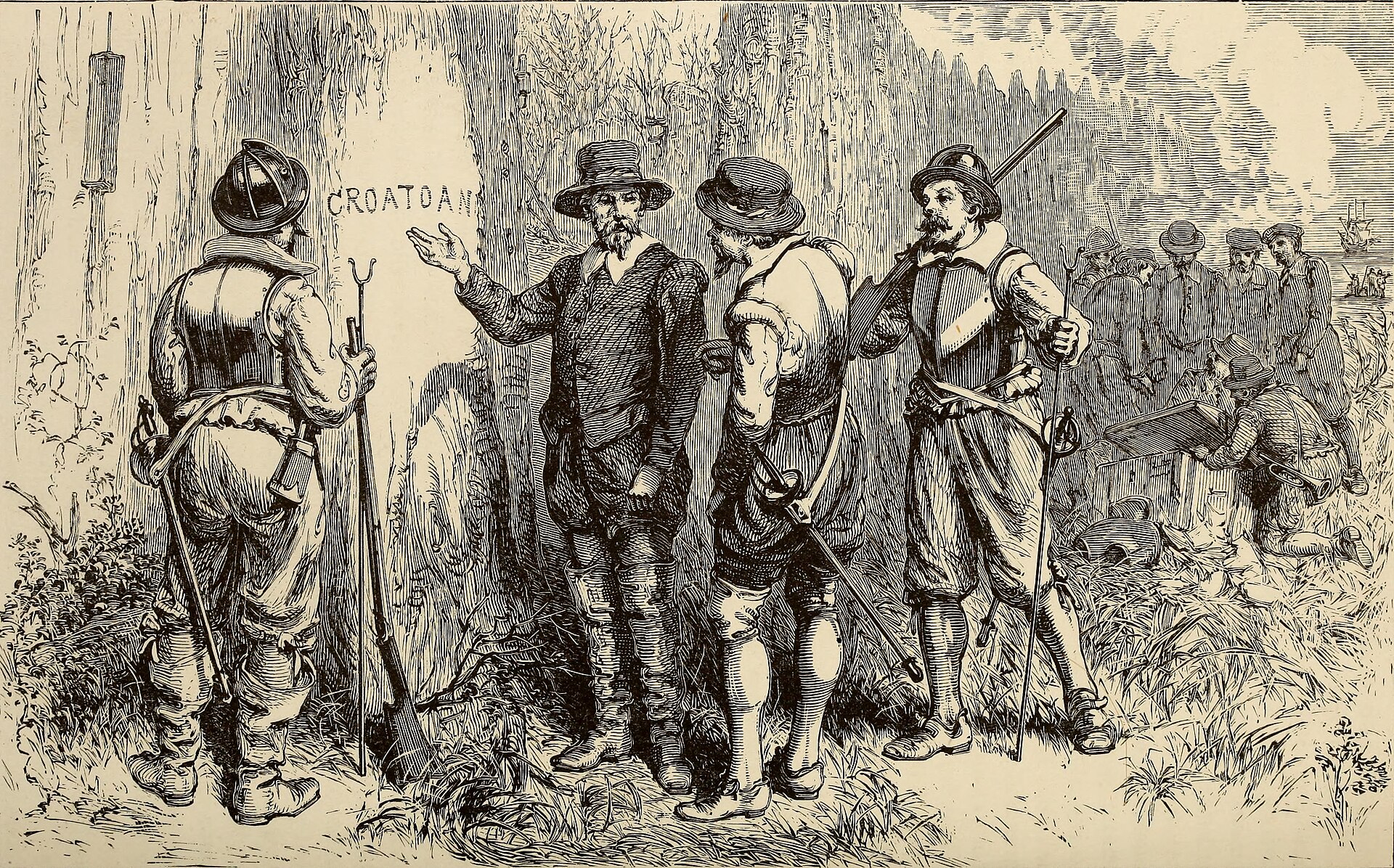
The Lost Colony of Roanoke is a disappearance shaped by distance. In 1587, English settlers arrived on Roanoke Island. Governor John White soon returned to England for supplies, expecting to come back. War with Spain and practical delays kept him away until 1590. When he returned, the colony was gone.
The famous clue was the word Croatoan, carved at the site. It has become one of the most overburdened words in strange history. In context, it likely referred to Croatoan people or Croatoan Island, not to a curse, code or supernatural force. White himself understood it as a possible sign of movement.
The absence of bodies and definitive records left the story open. Later generations filled that openness with theories: massacre, starvation, assimilation, secret survival, hidden descendants, murder, shipwreck and stranger inventions. The responsible archive keeps the possibilities tied to sixteenth-century conditions.
Those conditions were severe. The colonists depended on uncertain resupply, shifting alliances, food, weather and relations with Indigenous communities. A small colony under pressure may split, move or seek help. Survival could leave fewer English-style traces than later searchers expected.
Roanoke also asks readers to notice whose records dominate. The English absence became the mystery, while Indigenous presence is too often reduced to scenery or clue. Any serious interpretation has to treat Native communities as historical actors, not props in a disappearance tale.
Archaeology and documentary research continue to test possibilities, but no single final explanation has closed the case. That does not make every theory equally plausible. It means the record is incomplete.
For Devil’s Hideout, Roanoke is a model disappearance case: the mystery is real, but it belongs to colonial history, logistics and contact, not to supernatural vanishing.
The Croatoan Clue
The carved word most likely indicated a destination or associated community rather than a cryptic supernatural message.
What Could Have Happened
Relocation, dispersal, integration, hunger, conflict and disease are all more historically grounded than dramatic fantasy solutions.
Archive Lesson
A missing final record creates mystery, but responsible interpretation still has to respect context and probability.
Case Notes
- Claim
- The English colony at Roanoke vanished before relief arrived, leaving the word Croatoan carved at the site.
- Background
- The colony was part of England’s early colonising attempts in North America, dependent on fragile supply lines, diplomacy and survival in a landscape Europeans poorly understood.
- Reported events
- Governor John White returned to England for supplies and was delayed by war and logistics. When he came back in 1590, the settlement was empty and Croatoan had been carved nearby.
- Possible explanations
- Likely explanations include relocation, integration with Indigenous communities, starvation, conflict, disease, dispersal or some combination of pressures rather than a single dramatic vanishing.
- Sceptical view
- The word Croatoan is not a supernatural clue. It likely pointed toward a people or place connected to the colonists’ intended movement.
- Why it still interests people
- Roanoke persists because the record stops at the most haunting moment: a deserted settlement, a carved word and no final roll call.
- People or entities
- John White, Virginia Dare, Roanoke colonists, Croatoan people
Sources and Further Reading
- Wikimedia Commons: CROATOAN, The Lost ColonyPublic-domain image used for this entry.
- National Park Service: The Lost ColonyOfficial Fort Raleigh history overview.
- Britannica: Lost ColonyReference overview of the colony and disappearance.
Claim, Context and Cautions
- The Croatoan Clue
- The carved word most likely indicated a destination or associated community rather than a cryptic supernatural message.
- What Could Have Happened
- Relocation, dispersal, integration, hunger, conflict and disease are all more historically grounded than dramatic fantasy solutions.
- Archive Lesson
- A missing final record creates mystery, but responsible interpretation still has to respect context and probability.
Sources and Further Reading
- Wikimedia Commons: CROATOAN, The Lost ColonyPublic-domain image used for this entry.
- National Park Service: The Lost ColonyOfficial Fort Raleigh history overview.
- Britannica: Lost ColonyReference overview of the colony and disappearance.