Hoaxes & Debunks
The Face on Mars: Pareidolia in a Planetary Archive
The Face on Mars became a classic anomaly because one low-resolution Viking image looked uncannily human until better imaging restored it to geology.
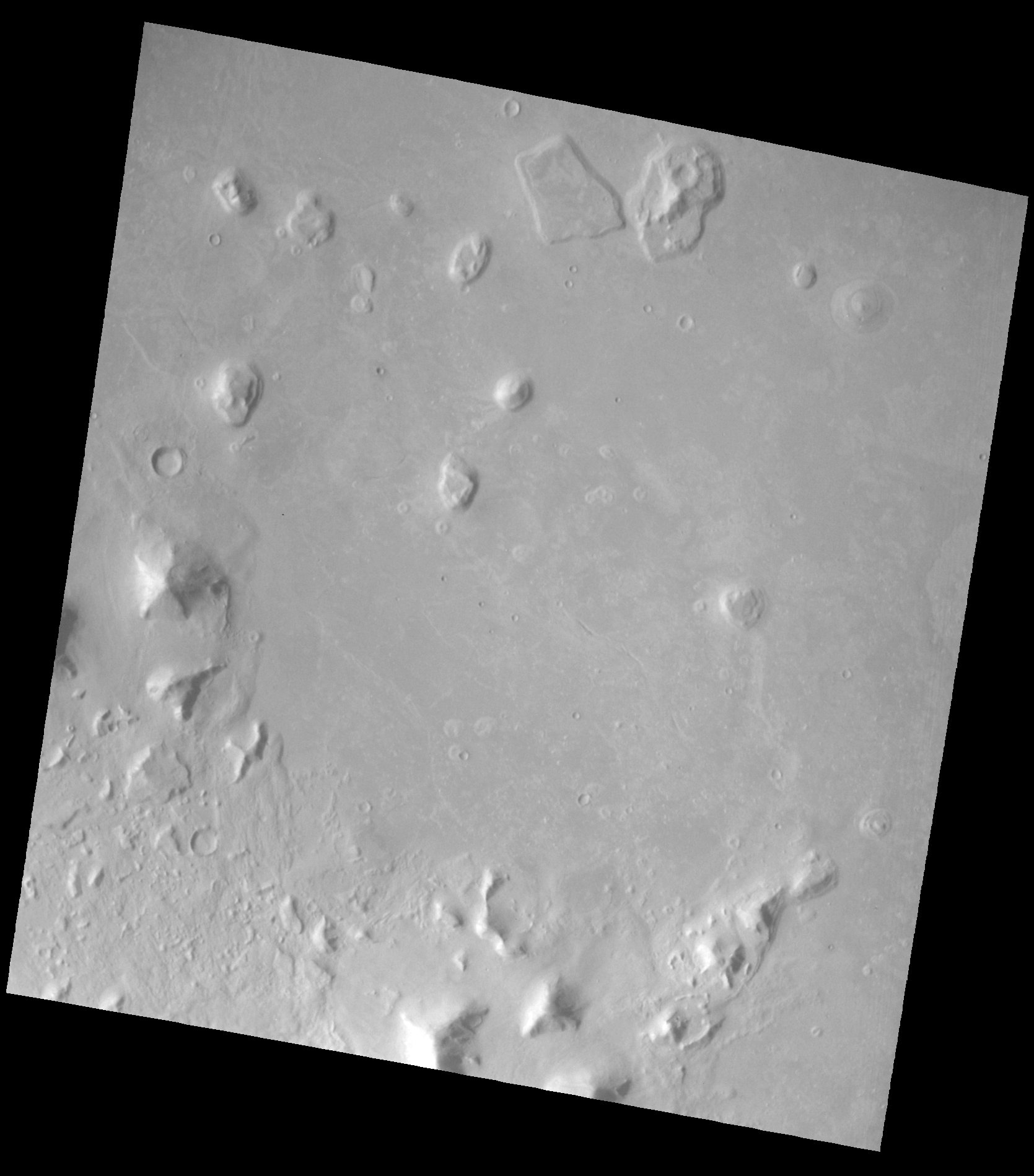
The Face on Mars is one of the cleanest modern examples of a mystery solved by better imaging. In 1976, a Viking Orbiter image of the Cydonia region showed a landform that looked uncannily like a human face. The image was grainy, dramatic and perfectly suited to speculation.
NASA described the feature plainly as a rock formation resembling a head, but the image quickly moved into a different life. Books, lectures and television segments treated the face as possible evidence of artificial construction, sometimes pairing it with claims about nearby pyramids or a suppressed Martian civilisation.
The core mechanism is pareidolia: the human tendency to find meaningful shapes, especially faces, in ambiguous visual information. On Earth, people see faces in clouds, stains, rocks and buildings. Mars simply gave the habit a more exciting stage.
Low resolution mattered. So did lighting. Shadows gave the landform apparent eyes, nose and mouth. Once viewers had been told there was a face, the pattern became harder not to see. Expectation trained the eye.
In 1998 and later, Mars Global Surveyor acquired higher-resolution images of the feature. Additional imaging by other missions made the landform less face-like and more geological. The anomaly did not survive the arrival of better data.
The responsible lesson is not that people were foolish to notice the resemblance. Noticing patterns is human. The failure comes when the resemblance is protected after stronger evidence arrives.
For Devil’s Hideout, the Face on Mars belongs on the debunking shelf because it is fair, visual and reusable. It teaches that mysteries should be allowed to become less mysterious when the archive improves.
Why It Looked Like a Face
Low resolution, shadow and human face-detection made a natural mesa appear artificial in the original image.
What Changed
Higher-resolution images from later missions showed the feature in enough detail to remove the strongest artificial-structure claim.
Archive Lesson
The first image is not always the best evidence. Revisit striking claims when better data becomes available.
Case Notes
- Claim
- A landform in the Cydonia region of Mars was claimed by some to be an artificial face, possibly evidence of a lost Martian civilisation.
- Background
- The original Viking image was low resolution and lit at an angle that made a mesa resemble a human face to many viewers.
- Reported events
- The image became famous after release in 1976. Later Mars Global Surveyor and Mars Express imaging showed the feature in greater detail as a natural landform.
- Possible explanations
- The explanation is pareidolia amplified by low resolution, shadow, image contrast, expectation and the cultural power of seeing a face where one is not intended.
- Sceptical view
- The case is a textbook reminder that image interpretation must improve when better data arrives. A striking first impression is not a final analysis.
- Why it still interests people
- It still fascinates because the human brain is excellent at finding faces, and space images make that habit feel cosmic.
- People or entities
- NASA Viking imaging team, Mars Global Surveyor team, Cydonia anomaly writers
Sources and Further Reading
- NASA Science: Face on MarsNASA image and mission context.
- NASA APOD: A Face on MarsNASA explanation of the original image and later context.
- ESA: Cydonia – the face on MarsEuropean Space Agency overview of later high-resolution imaging.
Claim, Context and Cautions
- Why It Looked Like a Face
- Low resolution, shadow and human face-detection made a natural mesa appear artificial in the original image.
- What Changed
- Higher-resolution images from later missions showed the feature in enough detail to remove the strongest artificial-structure claim.
- Archive Lesson
- The first image is not always the best evidence. Revisit striking claims when better data becomes available.
Sources and Further Reading
- NASA Science: Face on MarsNASA image and mission context.
- NASA APOD: A Face on MarsNASA explanation of the original image and later context.
- ESA: Cydonia - the face on MarsEuropean Space Agency overview of later high-resolution imaging.