Unexplained Phenomena
The Enfield Poltergeist: Noise, Narrative and the Council House on Green Street
The Enfield case remains famous because it was recorded, argued over and repeatedly reinterpreted, which makes it a perfect archive for uncertainty.
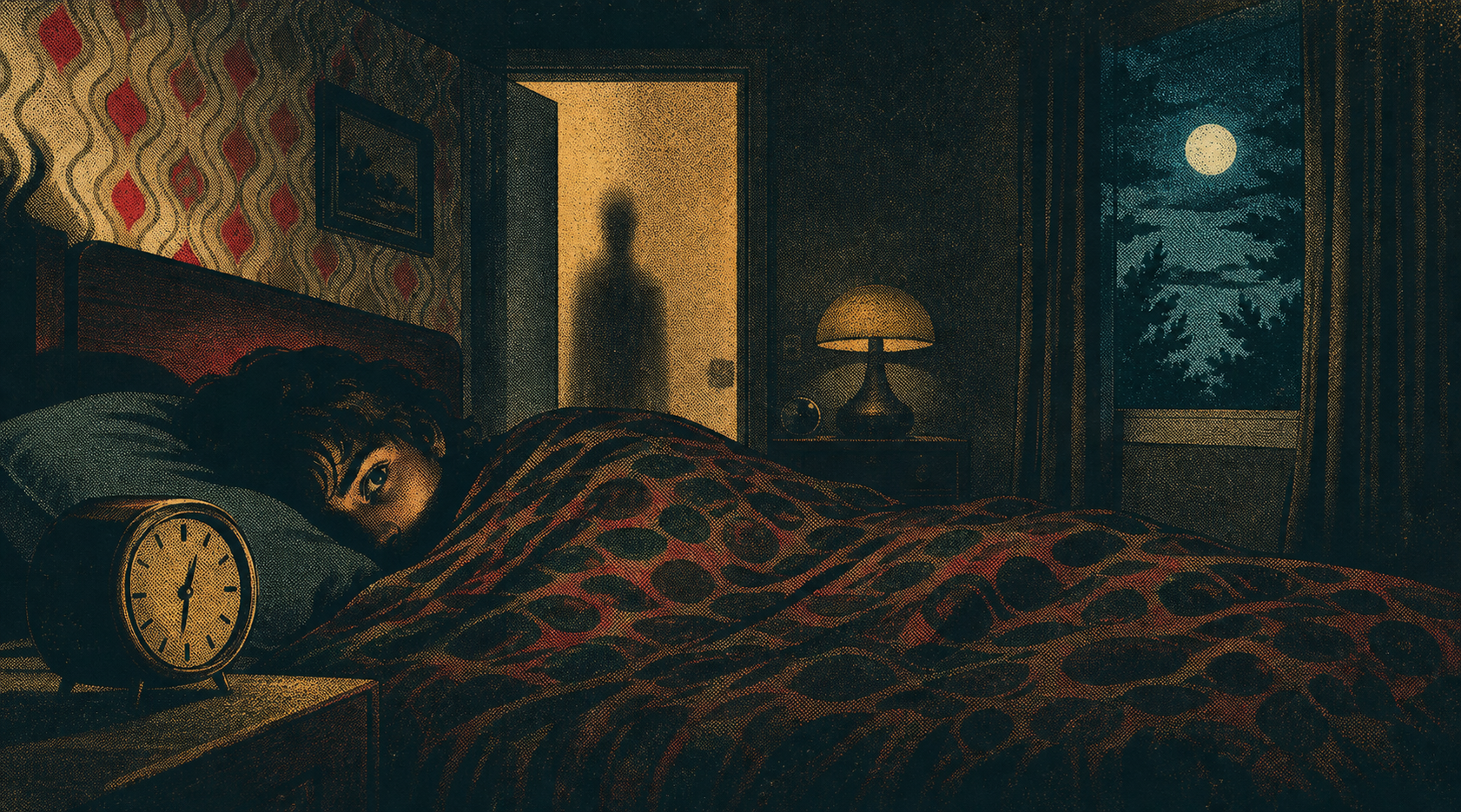
The Enfield Poltergeist is one of the best-known modern haunting cases, and that fame is part of the evidence problem. A council house in north London became the centre of a long dispute over knocks, voices, objects moving and the behaviour of the Hodgson family, especially Janet Hodgson.
The case gained traction because people were there to record it. Maurice Grosse and Guy Lyon Playfair documented incidents, journalists followed the story and skeptics pointed to the possibility of performance and suggestion. That overlap between research and spectacle makes the case unusually rich, and unusually slippery.
The strongest lesson is that recording a claim does not resolve it. Audio tapes, photographs and testimony preserve the atmosphere of a disturbance, but they do not automatically identify its cause. A noisy house can be a noisy house, a stage, a family stress point or some mix of all three.
Enfield still matters because it shows how quickly a modern haunting becomes an archive of interpretations. Each book or documentary does not merely describe the case; it reshapes the case into a different kind of certainty.
For Devil’s Hideout, this is exactly the sort of material that belongs in the files: claims, counterclaims and a body of records that make the dispute itself historically important.
Why It Stuck
There were recordings, witnesses and repeated visits, so the case gained enough texture to survive long after the first wave of news.
How to Read It
Treat the documents as evidence of a disturbance and of a cultural argument, not as proof that every reported event was supernatural.
Case Notes
- Claim
- A council house was said to be plagued by knocks, moving furniture, voices and other poltergeist-like activity centred on Janet Hodgson.
- Background
- The case became famous because it was investigated by journalists, paranormal researchers and sceptics at the same time, each with different incentives and methods.
- Reported events
- Witnesses reported dramatic incidents, recordings were made and the story entered newspapers, books and documentaries, but the evidence remained mixed and contested.
- Possible explanations
- Possible explanations include performance, suggestion, family stress, misinterpretation and the ordinary difficulty of recording chaos in a crowded house.
- Sceptical view
- The case is strongest as a study in how a haunting becomes a media event. The documentation is real; the conclusion is not settled.
- Why it still interests people
- Enfield persists because it is not a neat fake or a neat ghost story. It is a struggle over what counts as happening when many people are already convinced something is happening.
- People or entities
- Janet Hodgson, Margaret Hodgson, Maurice Grosse, Guy Lyon Playfair
Sources and Further Reading
- Psi Encyclopedia: The Enfield PoltergeistResearch overview from the Society for Psychical Research ecosystem.
- Encyclopedia.com: Enfield PoltergeistReference summary of the case and its documentation.
- Britannica: PoltergeistGeneral context on poltergeist traditions and interpretation.
Claim, Context and Cautions
- Why It Stuck
- There were recordings, witnesses and repeated visits, so the case gained enough texture to survive long after the first wave of news.
- How to Read It
- Treat the documents as evidence of a disturbance and of a cultural argument, not as proof that every reported event was supernatural.
Sources and Further Reading
- Psi Encyclopedia: The Enfield PoltergeistResearch overview from the Society for Psychical Research ecosystem.
- Encyclopedia.com: Enfield PoltergeistReference summary of the case and its documentation.
- Britannica: PoltergeistGeneral context on poltergeist traditions and interpretation.