Folklore & Legends
Black Shuck at Blickling Hall: The Dog That Prefers the Roadside
Black Shuck endures because it is a black-dog legend that can stand for warning, death, landscape and local memory at the same time.
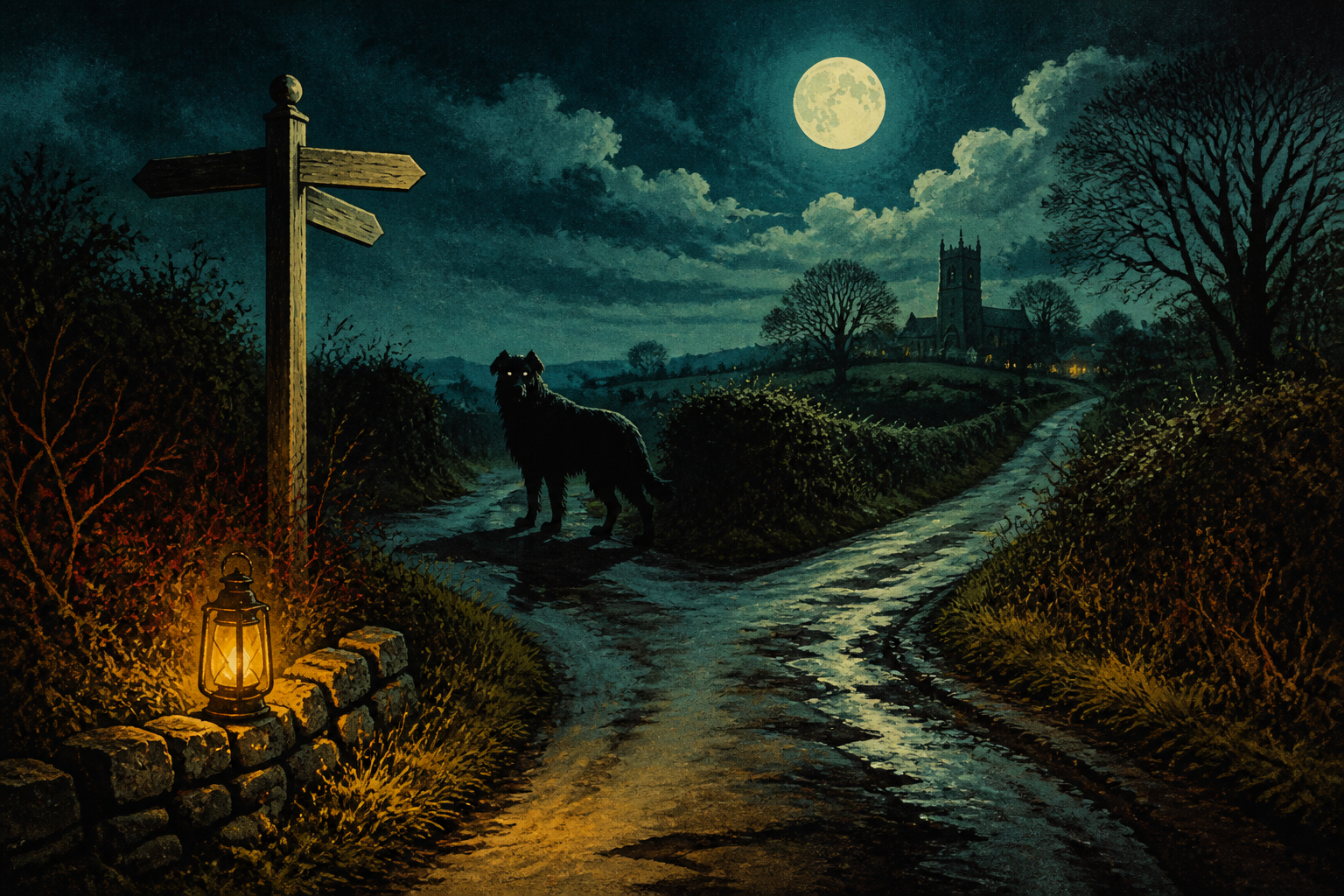
Black Shuck is the sort of creature that feels older than it is because it can be attached to so many roads and churches. The legend of a huge black dog roaming East Anglia has been retold for centuries, with Blickling Hall and other places absorbing the story as if it were weather.
The important thing is not whether one particular dog exists. It is how the legend functions. Black Shuck is what communities name when a road feels unsafe, the dark is too complete or a place seems to carry warning in its architecture.
That flexibility keeps the story alive. Each retelling can add eyes, size, flames, sound or omens, but the creature remains recognisable because the underlying role never changes much: something that turns the night into a threshold.
For Devil’s Hideout, Black Shuck belongs in folklore and fear because it shows how a local monster can be less a sighting than a social tool.
Why the Dog Endures
It can absorb whatever a community wants the dark to mean without losing its identity as a black-dog legend.
What the Archive Says
The story is strongest as folklore transmission, not as evidence for a single animal or ghost.
Case Notes
- Claim
- A ghostly black dog is said to haunt East Anglia, sometimes appearing at churches, roadsides and the grounds around Blickling Hall.
- Background
- The legend belongs to a wider family of British black-dog stories, where the creature often marks danger, death or a boundary in the landscape.
- Reported events
- Different versions place Black Shuck at churches, crossroads and estates, and later writers gathered those stories into a regional folklore map.
- Possible explanations
- The strongest explanation is folkloric transmission: a useful monster travelling between storytellers, places and printed collections.
- Sceptical view
- Black Shuck is not a zoological species. It is a recurring narrative form that allows communities to talk about fear in a local accent.
- Why it still interests people
- It stays alive because black dogs are one of the most adaptable creatures in English folklore: omen, warning, companion and night boundary all at once.
- People or entities
- Norfolk storytellers, Blickling Hall tradition, local antiquarians, modern folklorists
Sources and Further Reading
- Norfolk Record Office: Black Shuck at Blickling HallLocal archive discussion of the legend.
- Aylsham History: Black Shuck journal articleLocal history material discussing the legend and its roots.
- Britannica: BogeymanGeneral context for creature stories that discipline behaviour and fear.
Claim, Context and Cautions
- Why the Dog Endures
- It can absorb whatever a community wants the dark to mean without losing its identity as a black-dog legend.
- What the Archive Says
- The story is strongest as folklore transmission, not as evidence for a single animal or ghost.
Sources and Further Reading
- Norfolk Record Office: Black Shuck at Blickling HallLocal archive discussion of the legend.
- Aylsham History: Black Shuck journal articleLocal history material discussing the legend and its roots.
- Britannica: BogeymanGeneral context for creature stories that discipline behaviour and fear.