Folklore & Legends
The Bell Witch: A Haunting Built From Legend and Memory
The Bell Witch story is one of America's most durable haunting legends, but its power comes from later storytelling as much as any recoverable event.
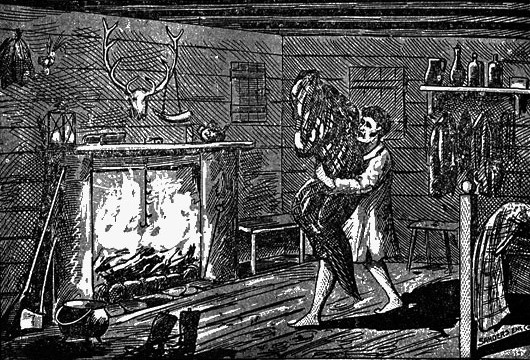
The Bell Witch is often presented as a classic American haunting, but the archive problem begins almost immediately. The events are traditionally placed between 1817 and 1821 around the Bell family near Adams, Tennessee. The most influential written forms came later, after memory and local storytelling had already had time to do their work.
The story’s ingredients are powerful: an invisible presence, knocks and voices, a suffering family, religious language, a tormented daughter, an afflicted father and visitors drawn to the farm. In many versions, the entity has personality. It argues, sings, quotes scripture and behaves less like a vague ghost than a malicious member of the household.
That personality is exactly why the legend travels so well. A haunting made of bumps in the night can fade. A haunting that talks back becomes theatre. It gives storytellers dialogue, motive and conflict. It also lets later audiences treat the haunting as a social drama rather than just a list of phenomena.
The caution is source distance. Later printed accounts do not give us a clean diary of events as they happened. They give us a shaped tradition. Names, places and family connections anchor the story, but anchoring is not the same as verification.
A responsible reading does not need to erase the Bell Witch. It asks what kind of truth the story carries. It may preserve local anxiety, family conflict, religious imagination, frontier fear, gendered pressure around Betsy Bell, or simply the pleasure of a tale that can be retold around a dark room.
The legend also demonstrates how places inherit stories. Adams, Tennessee, is now inseparable from the Bell Witch in popular imagination. A historical marker, tourism, books and performances keep the haunting alive as public memory.
For Devil’s Hideout, the Bell Witch belongs in folklore and legends: a case where the important question is not only ‘What happened?’ but ‘How did this story learn to survive?’
Source Distance
The major printed tradition is later than the claimed events, so every confident detail needs caution.
Why It Endures
The story has characters, dialogue, place and a repeating antagonist, which makes it unusually durable as folklore.
Archive Status
Best labelled folklore: culturally important, locally grounded and not securely verified as a paranormal event.
Case Notes
- Claim
- The Bell family was said to be tormented by an intelligent invisible presence that made sounds, spoke, struck people and became known as the Bell Witch.
- Background
- The legend belongs to early nineteenth-century rural Tennessee but survives mainly through later print, family memory, local tourism and folklore retelling.
- Reported events
- Accounts describe knocks, voices, physical attacks, scripture arguments and the death of John Bell, though the distance between events and major printed versions complicates the record.
- Possible explanations
- Possible explanations include family legend, local conflict, illness, later embellishment, folklore motifs, religious anxiety and the conversion of uncertain memory into regional identity.
- Sceptical view
- The case should be treated as folklore rather than a verified paranormal event. The sources are late, layered and shaped by storytelling needs.
- Why it still interests people
- It remains compelling because it shows how a haunting can become a place brand, family inheritance, ghost story and historical puzzle all at once.
- People or entities
- John Bell, Betsy Bell, Bell family storytellers, Later Tennessee folklorists
Sources and Further Reading
- Wikimedia Commons: WmPorterBurnWitch.jpgPublic-domain illustration used for this entry.
- Tennessee Encyclopedia: Bell WitchTennessee Historical Society overview of the legend and location.
- World History Encyclopedia: The Bell WitchAccessible discussion of legend, history and interpretation.
Claim, Context and Cautions
- Source Distance
- The major printed tradition is later than the claimed events, so every confident detail needs caution.
- Why It Endures
- The story has characters, dialogue, place and a repeating antagonist, which makes it unusually durable as folklore.
- Archive Status
- Best labelled folklore: culturally important, locally grounded and not securely verified as a paranormal event.
Sources and Further Reading
- Wikimedia Commons: WmPorterBurnWitch.jpgPublic-domain illustration used for this entry.
- Tennessee Encyclopedia: Bell WitchTennessee Historical Society overview of the legend and location.
- World History Encyclopedia: The Bell WitchAccessible discussion of legend, history and interpretation.