Hoaxes & Debunks
The Cardiff Giant: America’s Stone Hoax and the Business of Belief
The Cardiff Giant was a carved gypsum fake sold as a petrified ancient man, and it remains one of the cleanest lessons in spectacle, profit and belief.
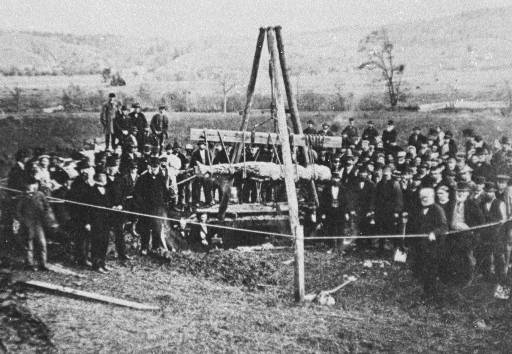
The Cardiff Giant is a beautifully blunt hoax. In 1869, workers digging a well near Cardiff, New York, uncovered a ten-foot figure that was promoted as a petrified ancient giant. The object was not ancient, not human and not a fossil. It was carved gypsum.
George Hull, a tobacconist with a taste for provocation and profit, arranged the scheme. The figure was quarried, carved, treated to look aged, transported and buried. Its later discovery was staged to look accidental, which gave the object the emotional force of revelation.
The hoax worked because it met several desires at once. Some viewers wanted biblical giants. Others wanted scientific wonder. Others simply wanted spectacle. The Cardiff Giant did not need everyone to believe the same thing; it only needed enough people to pay to look.
Experts were sceptical quickly. Othniel C. Marsh and others recognised problems with the object, and Hull eventually admitted the fraud. But exposure did not immediately end public fascination. P. T. Barnum’s involvement with a copy of the giant showed that a fake could still make money after people knew fakery was part of the show.
That is the Cardiff lesson in miniature: debunking a claim does not always kill the attraction. Sometimes the story of deception becomes the attraction. The audience moves from ‘Is it real?’ to ‘Look how many people were fooled.’
As an archaeology hoax, the case also teaches chain of custody. An object with no secure excavation context, no independent testing and an origin story controlled by interested parties should be treated as a performance until evidence says otherwise.
For Devil’s Hideout, the Cardiff Giant belongs beside Piltdown and Cottingley as a practical debunking tool. It reminds readers that a mystery can be profitable, and profit is evidence too.
How It Worked
The hoax depended on staged discovery, physical scale, public appetite and a story that could be interpreted as religious, scientific or entertaining.
Why Exposure Did Not End It
Once famous, the giant remained interesting as a famous fake. The hoax became part of the product.
Archive Lesson
Ask who controls an object’s origin story, who profits from display and whether independent testing supports the claim.
Case Notes
- Claim
- A ten-foot stone figure unearthed by well diggers was promoted as a petrified ancient giant.
- Background
- The hoax exploited public fascination with archaeology, biblical literalism, scientific novelty, sideshow entertainment and post-Civil War spectacle.
- Reported events
- George Hull arranged for a gypsum figure to be carved, aged, buried and later discovered. Crowds paid to see it before experts and confession exposed the fraud.
- Possible explanations
- The explanation is deliberate fabrication for profit and provocation, amplified by showmanship and public appetite.
- Sceptical view
- The Cardiff Giant shows why provenance matters. A dramatic object found at exactly the right moment is not evidence until its origin is tested.
- Why it still interests people
- It remains useful because the pattern still recurs: an object appears, belief and money gather around it, experts object, and the spectacle keeps selling.
- People or entities
- George Hull, William Newell, Othniel C. Marsh, P. T. Barnum
Sources and Further Reading
- Wikimedia Commons: Cardiff giant exhumed 1869Public-domain image used for this entry.
- Britannica: Cardiff GiantReference overview of the hoax and exposure.
- The Farmers’ Museum: Cardiff Giant highlightMuseum context for the surviving object and its interpretation.
Claim, Context and Cautions
- How It Worked
- The hoax depended on staged discovery, physical scale, public appetite and a story that could be interpreted as religious, scientific or entertaining.
- Why Exposure Did Not End It
- Once famous, the giant remained interesting as a famous fake. The hoax became part of the product.
- Archive Lesson
- Ask who controls an object's origin story, who profits from display and whether independent testing supports the claim.
Sources and Further Reading
- Wikimedia Commons: Cardiff giant exhumed 1869Public-domain image used for this entry.
- Britannica: Cardiff GiantReference overview of the hoax and exposure.
- The Farmers' Museum: Cardiff Giant highlightMuseum context for the surviving object and its interpretation.